Showing posts with label Travel - Myanmar. Show all posts

Sunday, 17 October 2021

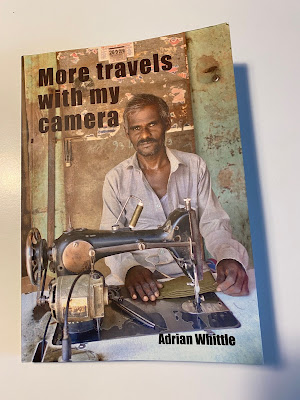
More Travels With My Camera

American photographer Alfred Eisenstaedt famously said, “it is more important to click with people than to click with the shutter”. I agree with him. For me, a photograph is often the culmination of a longer exchange with a stranger who initially interests me because of their face, clothing or activity. This exchange may be short or can develop into a more sustained connection. There are people in Kolkata, Mumbai, and Delhi that I clicked with on my first visit who I now seek out each time I return. 

This could be because I am a lover of stories. Some of my best pictures have been taken after or while hearing about the lives of others. People will often reveal intimate things about themselves if someone shows interest, even a complete stranger. In return the photographer may be asked to share their story and when traveling I am often questioned about my family, work, and financial and marital status. 


My curiosity has led to unexpected experiences. I’ve been asked to sing in Hindi in a barber shop in Lucknow and also by a group of sweepers in a Mumbai street. I’ve been quizzed on Premier League football and the British Royal Family by tipsy agricultural workers in a remote part of Myanmar. In a Kolkata street quite a crowd gathered when a vendor refused to believe that I don’t have a car. His parting shot was: “if you don’t have a car then you are not from London”. 


Next week, my new exhibition, More Travels With My Camera, opens at the Jeannie Avent Gallery in East Dulwich, London.  It includes photographs taken in Cuba, India, Myanmar and Peru between 2017 and early 2020. In early 2020 international travel became almost impossible and is only now, beginning to recover. Myanmar has seen violent and ongoing political upheaval and in Cuba there have been the first anti-government demonstrations for thirty years. It may still be some time before it is possible to revisit some of the people pictured in More Travels With My Camera. Until then I hope my photographs will bring their stories to a wider audience.


More Travels With My Camera opens at the Jeannie Avent Gallery, East Dulwich, London SE22 9EU on October 21st and runs until November 2nd. The gallery will be open every day from 10-5 and 10-6 on Fridays. 


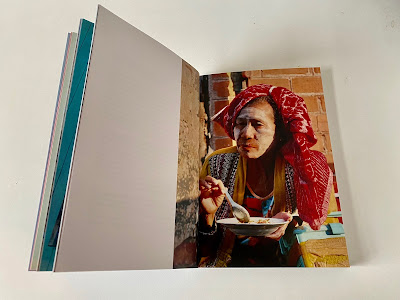
The images featured in this post are from a book produced to accompany the exhibition, also entitled "More Travels With My Camera". It contains 36 full colour pictures and the stories behind some of them. Copies will be available for purchase at the gallery during the period of the exhibition or by emailing adrianpwhittle@outlook.com 


Friday, 1 January 2021

Travels With My Camera 2020 - The Best Pictures

I had big travel plans for 2020. For obvious reasons most of them did not come to fruition, including a first time visit to Angola and a return to India. However, I did manage to travel a little before everything stopped. I spent a few days in Bangkok at the beginning of the year en route to my third visit to Myanmar. I also made my annual Israel visit but had to cut things short when it became obvious that air travel was grinding to a halt. This resulted in my doing significantly less photography than in previous years. It also meant that lockdown permitting, I spent some time in the streets of London looking for interesting shots much closer to home.

The pictures included in this post are some of my personal favourites from 2020. Others have been particularly well received on social media or at the exhibition I was able to hold at the Jeannie Avent Gallery in Dulwich, South London in August. This sixth incarnation of my Travels With My Camera show was the most successful so far. It was a great location and a rewarding experience. I enjoyed talking to visitors, listening to their feedback and learning from the advice of some of the more experienced photographers who came along. I had planned another exhibition in the cafe gallery of the Queen's Theatre in Hornchurch but this, like much else, fell victim to the lockdown.

Bilone and her grandson, Kasae Kum, Kayah State, Myanmar

Pop Nyat Khaing school for nuns, Loikaw, Myanmar 

Despite the disruption to my plans, 2020 provided me with some new experiences. In Myanmar I visited Kayah State for the first time and spent time in villages only recently opened up to overseas visitors. This included spending time with several members of the Kayah ethnic group who gave me free reign to photograph them going about their daily activities. The picture of Bilone with one of her grandchildren is perhaps my favourite picture of the trip, if not of the year. I was struck by the easy and obvious affection between grandmother and grandchild and how comfortable they were together. I also loved the way the light fell on Bilone's face, illuminating her love for the child. 

Still in Kayah State, I visited a school for young nuns in Loikaw. Many of the girls are orphans or from families unable to look after them. They are placed in the nunnery where they will be fed, cared for and receive at least some education. Many of the children were shy, but one girl in particular was fascinated by the camera. She grinned at me and pulled faces before turning back to her work. She then turned round once more just as a patch of light fell on the wall behind her. And that was the shot. 

Shy flower seller, Yangon

Breakfast at the wholesale fish market, Yangon

Yangon is one of my favourite cities and once again I enjoyed early morning expeditions to the various wholesale markets, photographing the workers going about their daily tasks as well as capturing some interesting portraits. I especially like the picture of the shy flower seller who was at first reluctant to be photographed, but then changed his mind and approached me whilst carrying a huge bunch of white flowers, hiding just a little of his face being them. The woman seen ladling food from her bowl in the picture below was enjoying her breakfast in the wholesale fish market when I saw her. The Yangon based watercolorist and my good friend, Sai Pyae Sone Aye, used this photograph as inspiration for one of his beautiful works. I look forward to seeing it next time we meet.

Still in Myanmar, I visited the city of Mawlamyine for the first time. I happily spent a couple of days wandering through its narrow lanes and markets and am keen to return at the earliest opportunity. It was here that I came across a young man working on a new well, pumping muddy water from the ground in an area where instant access to clean water is not guaranteed. He is pictured below.

A new well, Mawlamyine, Myanmar

Alone in a crowd, Meah Shearim, Jerusalem, Israel

I love portrait photography and am especially attracted to informal portraits where the subject has less opportunity to hide their true mood or feelings. I particularly like three portraits from 2020. The first is of a young Jewish man taken during the Purim celebrations in Meah Shearim, Jerusalem. This is an ultra-Orthodox neighbourhood and photography is normally unwelcome there, but during Purim with the right approach and some contacts it is possible. Purim is a chaotic time in Meah Shearim. People wear costumes or disguises and alcohol consumption is encouraged - at least amongst the men. This young man seemed alone in the crowd, slightly apart from the celebrations and although physically present, somehow absent. I wonder what his story is.

The second portrait I've chosen from last year is of a little girl in Bangkok. I noticed her sitting with her grandmother on the step of a shop house in the Klong Toey market. Noticing the camera, and much to her grandmother's amusement, she began to laugh, wave and pose before finally leaning standing quietly against the house gate which framed her face perfectly. In this quiet moment she is somehow similar to the young man in Jerusalem, lost in thought, no longer with us.

My third choice is a portrait of Bilot, another Kayah woman and friend of Bilone featured in the picture at the top of this post. I spent some time talking to her before taking the camera out. She was optimistic and funny. She offered me home made rice wine and betel leaf and teased me about traveling alone. I think this portrait captures the self she showed me during our conversation.

The dreamer, Klong Toey, Bangkok, Thailand

Bilot laughing, Kasae Kum, Kayah State, Myanmar

On the way to the flea market, Sclater Street, London

After my Myanmar/ Bangkok and Israel trips I had a long spell where I hardly picked up my camera. I fell ill in late March and took several weeks to recover and of course, the national lockdown much reduced the opportunity for my preferred kind of photography. However once the initial lockdown was lifted, I made several weekend visits to Spitalfields, close to my home in East London. The Sunday fleamarket market and nearby shops act as a magnet for many young, fashion conscious visitors. They also attract many local people who have lived in the area either their whole life or for many years. The pictures above and below were taken in Sclater Street near the market and represent the different audiences it attracts. 

On the catwalk, Sclater Street, London

I originally intended to include just ten pictures in this post but whilst drafting it I decided to indulge myself and include two more shots from my time in Jerusalem. One shows an ultra-Orthodox Jewish boy entertaining himself whilst his father (not pictured) says his prayers at the Kotel (also known as the Western Wall and the Wailing Wall). I liked the interplay between the lines on his sweatshirt and those of the stacked chairs, as well as his stylised movement. The second picture is of a teenager, sunlight on his face and the worse for wear after over indulging at Purim. 

When you get bored waiting for your dad, Jerusalem, Israel

Too much to drink at Purim, Meah Shearim, Jerusalem, Israel

Thank you if you came to my Jeannie Avent Gallery exhibition, or if you follow me on various social media. I hope to see you again soon. Happy New Year to everyone.

If you are interested in any of these pictures please contact me at adrianpwhittle@outlook.com

You might also like Purim in Meah Shearim or Meeting the Kayah Women of Myanmar

Follow me on instagram or Flickr 

Please note: All rights reserved. None of these images may be reproduced, stored in a retrieval system, or transmitted in any form or by any means, electronic, mechanical, photocopying, recording or otherwise without my prior written permission.
Sunday, 2 February 2020

Faces of Yangon

Yangon is one of those cities that tourists visit for a couple of days, go to the main attractions and then leave thinking they've seen everything. They are wrong. True, it may lack the sophistication of some major Asian cities, has little in the way of nightlife and its public transport system can be challenging. But none of this matters when there is something, or someone, interesting around every corner. The eclectic mix of architecture that includes Indian and Chinese influences, crumbling survivors of the colonial period and classic Burmese style pagodas is reflected in the diversity of the people, many of them happy to share their story with interested passers-by.

Buddhist monk on Yangon's Circle Line train
The best place to see this rich mix is of course in the streets, particualrly the numbered lanes that cross the main boulevards of the city centre. From 17th Street to the high 20's it is a good idea to look up and admire the many remaining shop-houses, some of them 100 years old. Built to accommodate a commercial purpose on the ground floor with a residential unit above they are beginning to fall victim to developers so go and see them now. Some have retained their wooden facades and in 19th street in particular there are a number of Clan Association buildings with Chinese signage and the occasional, live, fighting cock tethered outside. There are also numerous markets. 17th Street hosts a famous daily street market as does the upper end of 38th Street, both of them selling all kinds of fresh fruit, vegetables, meat and fish as well as flowers, spices and other goods. The famous Bogalay Zay and Bogyoke markets are also worth a visit although the latter a little too touristy for me nowadays. Outside of the organised markets there are countless, often "informal" vendors selling snacks. fruit, household goods or offering various street side repair services.

Happy vendor, 17th Street
Waiting for customers, rickshaw driver, 14th Street
Interesting as the architecture and sale goods are, it is of course the people of Yangon that bring these streets to life and who hold a special attraction for me. They also make this one of the most photogenic locations I've ever visited and in general people are happy to pose for photographs. It is also relatively easy to take candid shots of the city's street life. One of the iconic sights of Yangon and Myanmar generally is the daily procession of Buddhist monks and nuns collecting donations of rice, other foods and sometimes money from the faithful who hope to gain merit from this good deed. I often find this to be can a moving sight as some of the nuns in particular are very young, many of orphans or from families too poor to look after them.

Breakfast in the San Pya fish market
Shy porter, Thiri Mingalar wholesale market
As well as walking the streets of Yangon, I enjoy visiting the huge wholesale markets located just a short distance from the city centre. The San Pya wholesale fish market and the vast Thiri Mingalar fruit, vegetable and flower market receive few foreign visitors.  So few that I don't recall seeing a single tourist during any of the visits I've made. The workers may be a little surprised to see a foreigner but are nonetheless very welcoming. In most cases they are too busy to spend much time talking but the workers are generally relaxed about being photographed. This makes up for the overpowering smell at San Pya which permeates everything and which will require you to send all of your clothes to the laundry after a visit!  Waterproof boots are also strongly advised if visiting.

This cheeky pair followed me around Thiri Mingalar until I took their picture
Worker with neck tattoos,  San Pya fish market
During my most recent time in Yangon, I had the privilege of visiting the neighbourhood of a good friend who I first met as a guide four years ago. Yuzana Garden City is about a thirty minute drive from the city centre. Primarily a residential area, it also has a large, busy market selling the usual food items and household goods. Until recently the market location was not busy as the vendors preferred to set up shop at the roadside. This may have been good for business but it prevented traffic from passing or in some cases even entering the streets. The local authority stepped in and there is now enforcement in place to prevent this behaviour - although it doesn't stop some vendors sneaking back to the street side in the afternoons!

As we walked through the market, people called out "hello"and "where are you from" - something that I have experienced in my travels in many countries, but here they also like to tease. The female vendors in particular have a good sense of humour, suggesting I might like to marry their friend or take them back to London with me. Several of them claimed me as their relative when neighbouring vendors expressed surprise at seeing me. My kind of humour. Here, not only were people happy to be photographed but some also requested me to take their pictures or those of their friends. I often find that when someone volunteers their friends for a picture, what they really mean is they want one of themselves but are too shy to ask. My hour or so in the market here passed very quickly and I am extremely grateful for the experience.


Herbs vendor, Yuzana Garden City
Snacks vendor, Yuzana Garden City
Rickshaw driver waiting for customers, Yuzana Garden City
I've written several times about the etiquette of photographing people in the street but it's worth mentioning a few things again. If I want to take a close-up or a more "formal" portrait, I always seek permission first. I wouldn't want someone to come up to me shove a camera in my face and then walk off. If I can I make efforts to talk to the person a little before requesting a picture. It's helpful to walk with someone local as they can interpret and also advise on any important issues that might not occur to an outsider. If I want to photograph children I always ask the parent or an adult accompanying them and I never photograph children who are alone. In markets I often buy something from a vendor first. This works better in some cases than in others. Buying a few pieces of fruit is not a problem and they can always be given to someone who needs them more than me. Fish, meat or live animals is a bit more of a problem! Obviously for candid shots things are a little different but it is still important to be sensitive and if someone says "no" or indicates they are unhappy with being photographed then accept this graciously and point your camera elsewhere. It is always good to show people their pictures on the camera screen and if possible to print copies and take them back to the although this can be difficult due to one's schedule or because it can be hard to find the people again.

The portraits featured in this post were taken over five days in January this year. I printed copies and was able to distribute some of them. I plan to continue this project and to capture the stories of some of Yangon's people during my next visit.


You can see more pictures from Myanmar here.

And to close, some more citizens of Yangon...

Rakhine woman, fruit vendor outside Indian Bazaar
Buddhist nun, 18th Street
Vendor, 17th Street
Alone and watching the world go by, 17th Street
Just me and my phone, porter in 17th Street
Ponderous look, 38th Street
Preoccuiped smoker, Merchant Road
Mister Ayoob, merchant in 41st Street
Time for a rest, 17th Street
Confidence, Innsein township, Yangon suburb 

Friday, 24 January 2020

Exploring the lanes of Mawlamyine

Mawlamyine is one of Myanmar's larger cities with a population of around 300,000 people. It was chosen by the British as the first capital of colonial Burma, a status it held between 1826 and 1852 and became an important centre for commerce in the late part of the 20th century. This was in large part due to the arrival significant numbers of Indian merchants and workers. By the late 1880's, they had formed the largest ethnic group in the city living and working alongside Burmans, Chinese, Malays, Armenians and even a handful of Jewish merchants. 

Preparing a new well, lanes of Mawlamyine
During the colonial period, the city was called Moulmein and gained mention in the writings of both George Orwell in Shooting An Elephant and Rudyard Kipling in his poem Mandalay. The streets are lined with some very fine examples of architecture dating from that period although much of it is now crumbling. There are also many buildings that show the strong influence of Indian design, particularly those with wooden facades carved in intricate patterns and of course in the numerous mosques and Hindu temples that can be found across the city.  There are also several important churches and pagodas including the spectacular hilltop Seindon Mibaya Kyaung which is under the care of a single, famously grumpy elderly monk. All of this should attract visitors in significant numbers but Mawlamyine does not receive the number of guests that other cities can boast. It is usually seen as a one or at most two nights stay over and a base for visiting other places. As regular readers may expect, I am about to disagree with this.

Indian influenced architecture
Red shutters, Seindon Mibaya Kyaung pagoda
Shop houses
The cosy, chaos of Mawlamyine's back lanes
I spent three days there and realised that this was not enough to see some of the big ticket items but more importantly to explore in detail the cramped, crowded, chaotic back lanes of the city or to exhaust the busy, sprawling markets. Hidden from the main streets and easily missed the lanes are noisy, dirty and sometimes hazardous to walk in yet I was drawn back to them several times. In these hidden alleyways life has not much changed in a hundred years and a warm welcome is given to those who venture into them. Living conditions are challenging and many of the homes have problems with accessing electricity and a regular clean water supply. Many people use the open wells that are scattered around the city, drawing water to wash clothes or to clean the home despite the fact that some of them contain rubbish and in some cases free roaming chickens, ducks and other fowl deposit their droppings in them. New wells are established to serve the demand for water. I witnessed several workers detailed on this work including the one pictured at the top of this post.

Despite this, there is an easy atmosphere in here. People sit outside their houses talking to their friends and neighbours whilst their children play in the street. They are curious about visitors as not many venture off the main tourist trail of churches, temples, mosques and pagodas. It is amazing how much goodwill a simple "Mingalabar" (hello in Myanmar) can win for you and how quickly it will be followed up with questions about where you come from, what your work is and where are your family. This is often accompanied by offers of tea or snacks, reminding me of the warmth of the people living in the lanes of North Kolkata.

Abdul and his grandson
Waiting for the tutor
The gang, back lane, Mawlamyine
In one of the lanes I noticed an elderly man crouched on the floor and using a hammer to work on a sheet of metal. Abdul is 87 years old. In fact it happened to be his birthday on the day I met him. He is a little deaf and one of his daughters came across to help us communicate. Despite being retired, Abdul likes to keep busy and he makes metal boxes to earn a little money. He confessed that he has few customers these days but he still enjoys working. His daughter was holding one of his grandchildren. I asked him how many he had. He wasn't sure and said  "I have grandchildren and great grandchildren. About 20 I think". He stood for a picture, proudly holding one of the twenty.

In the same alley I noticed three small children looking down from a first floor balcony. Others were arriving at the building carrying satchels and books. It was too late in the afternoon for them to be going to school and I asked a woman standing outside the building what was happening. She explained that children came here after school for private tuition. Competition for jobs is very tough in Myanmar and parents who can afford it send their children to these places in order to improve their chances. Many children do not get the chance to complete their formal education as the family needs them to work and help pay for food and a place to live. How humbling that parents in one of Mawlamyine's poorest neighbourhoods had prioritised education and the hope of a better future. At the same time other, poorly dressed children played in the alley amongst bags of cement. We sometimes forget how fortunate we are.

A little further on I met U Aung Khaing, also 87 years old. He was born in Kayin state but is from the Mon ethnic group, once rulers of a mighty empire and the predominant group in Mon State of which Mawlamyine is a part. They are now numerically in decline, to some extent due to inter-marriage with other groups. The Mon language is also in danger and work is being done in local schools to preserve it. Each ethnic group in Myanmar has its own customs and dress and U Aung Khaing was wearing the red lungyi of the Mon.

U Aung Khaing
Maulana in a Pashtun cap
As in India, drinking tea is a bit of a national pastime in Myanmar and there are teashops on every corner. I met Maulana sitting outside of of one of them. I was struck by his appearance, particularly by his wearing of a Pashtun cap, usually associated with Afghanistan and Pakistan and an unusual sight in Myanmar. I was keen to photograph him and was a little surprised when he immediately and enthusiastically agreed. He told me that he understands Urdu as well as Myanmar and invited me to sit and take tea for a while. A woman wearing the hijab sat at the next table and helped translate for us. I realised that she was his wife. It would be interesting to know more about their story.

In another lane I spotted a small shop with two sides open to the street. The customers were mainly elderly Chinese men. Myanmar has a significant Chinese minority and Yangon has a vibrant Chinatown. I stopped to talk to the two old men sitting in a corner facing the street and asked them if the tea was good. They told me that it was and that it was the best tea shop in Mawlamyine. I asked if they come every day and one of them confirmed that he did. I also asked about the name of the shop but was told it is nameless. A few minutes later his friend told me that the man who came every day was the owner. That might explain the regularity of his visits and the claim to it being the best tea shop in town. I haven't tried them all so I can't say.

As well as the ubiquitous tea shops, the city streets are filled with vendors offering various delights. In the lanes I came across a man selling tamarind from two containers held together on a yoke, allowing him to operate a "mobile" service and a woman selling thick, sticky jams from a street corner stall. And then there are the city's two large markets offer fruit, vegetables, meat, fish, huge bags of rice and salt, spices, household goods, electrical items.clothes, children's toys and more. Most of the vendors and shoppers are women. Shopping is a serious business here and it is educational to stand back and watch the expert hagglers reduce the price of a cauliflower using perfectly honed methods - cajoling, scowling, smiling and pretending to walk away before the deal is secured.

The best teashop in town?
The tamarind seller
Street corner jam vendor
Shopping is a serious business
In the Lower Market, I met the utterly charming Tin Ohn. Aged 67, he was born in Hpa An but his family fled to Mawlamyine when he was a child due to a period of inter-communal strife. He has never married and used the English word "Batchelor" to describe himself and also his two sisters who share a home with him. He is one of seven siblings, three of whom have already died. He spoke affectionately about his school days when he studied at an English medium Catholic school. He recalled the priests being strict disciplinarians "to drop litter was a very serious matter, we even had to be careful with the shavings from sharpening our pencils. Not like today". He especially remembered Father Francis who he said was a very good teacher. Tin makes his living by selling metal boxes but says that business is not so good these days. The family originally came from India but he does not know exactly where. His Indian name is Nadul Chowdhury which may (or may not) indicate that they came from Bengal.

I thought about this conversation a little later the same day. Away from the markets and the lanes and whilst admiring the city's largest mosque, I saw a small boy eating pieces of fruit from a plastic bag whilst maintaining a serious expression. "What are you eating" my friend asked him. "Pineapple" he replied. "Sour or sweet" we asked. "Sour. I like sour" he said. "Why aren't you at school?" I asked him. "I don't live here. I'm visiting" he replied. "Does your teacher know?" I asked. "No" he said and laughed. I felt sure Father Francis would not have approved.

Tin Ohn
The pineapple boy
A welcome smile
I look forward to returning to Mawlamyine before too long, to spend more time in the lanes and the markets, to test the theory of the best tea shop, to admire the eclectic architecture and to hear more stories of its friendly citizens. And perhaps to again meet the lovely friendly lady pictured above, one of the first people I met on arrival in the city and who welcomed me with her wonderful smile.


You can see more pictures from Myanmar here.