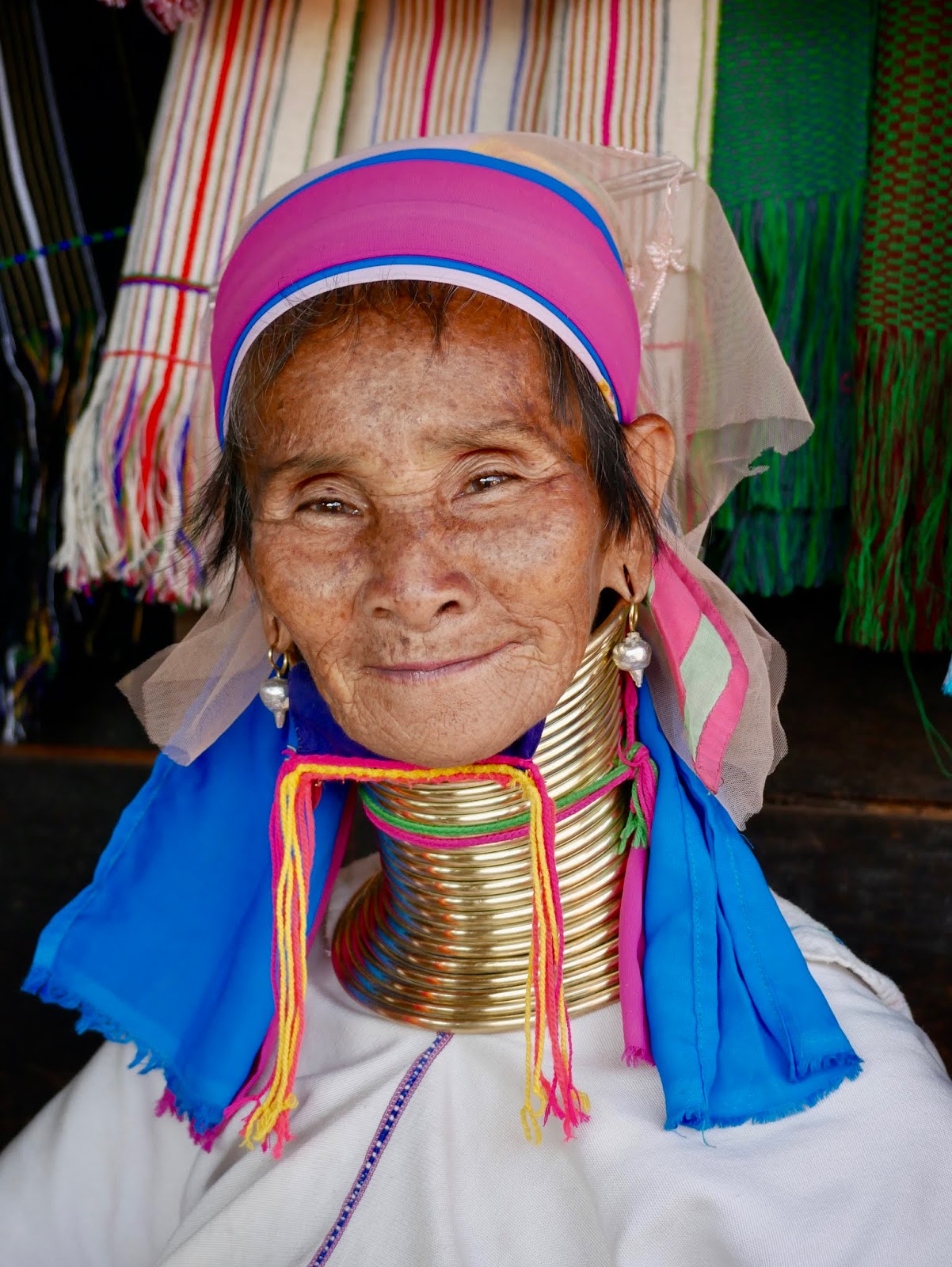
The friendliness shown by the ladies of the Hanuman Coffee Store was something I experienced throughout my time in Myanmar. When waiting to cross the very busy Sule Pagoda Road, I felt a hand on my arm and looking to my right saw it was an elderly man who said "not yet, too much traffic, very dangerous" before escorting me safely to the other side of the road before saying goodbye with a smile. I was also approached two or three times by people who wanted just to shake hands and say hello whilst many others nodded, smiled and said "mingalaba" as they passed.
Further evidence of this Myanmar kindness came on the day that the city changed all of its buses and launched completely new bus routes leaving thousands of people in the street unsure of how to get to and from work. There were hundreds of volunteers in the streets handing out information leaflets and helping people to get to the right place. And more than this, local companies had provided free mini-buses for the first few days of transition to ease the pressure on the new system. All of the drivers were volunteers as were the people handing out free water and snacks at the crowded bus stops. I was to see this generosity of spirit throughout my time in the country.
 |
| Faded grandeur, downtown Yangon |
 |
| 1922 apartment block, downtown Yangon |
 |
| Art deco apartment block, downtown Yangon |
Architecture is another passion of mine and Yangon has examples of many different styles ranging from ancient to contemporary. This includes many buildings from my favorite architectural period, 1900-1950. Some of these are in very poor condition whilst others have benefitted from restoration. The Yangon Heritage Trust is doing excellent work to persuade the authorities and building owners of the need to preserve the city's built heritage, despite the cost of doing so and the many other social and economic priorities in Myanmar.
 |
| The Balthazar building |
The downtown area has a cluster of colonial style buildings, some of which house government offices, others have become (or remain) banks and yet others provide a mix of commercial and residential space. In some cases ownership of buildings is unclear or the owners left the country for a variety of reasons and at different times since the Japanese occupation during the Second World War. A prime example of this is the once beautiful
Balthazar's building on Bank Street. This was once one of the city's most desirable addresses with an electric lift, imported Italian tiles and a decorative canopy above the entrance. The building was commissioned by Samuel Balthazar, an Armenian merchant born in Isfahan, Iran who came to the then Rangoon in 1866 to expand his family's business interests. Extremely successful, he was also to serve on the Municipal Council and the Chamber of Commerce. The family fled in 1942 before the advancing Japanese. Balthazar's is in a very sorry state today. The lift has not worked for many years, vegetation grows in the abandoned rooms and in the inner courtyard and some of the businesses that occupy space there have installed metal or plastic sheeting to prevent ceiling plaster from falling or water ingress. Despite all of this, the exterior red brickwork remains beautiful and catches the eye of passers-by. The future of the building is uncertain but it would be a terrible loss if it were not to survive.
 |
| The Strand Hotel Cafe |
The
Strand Hotel is just a few minutes away from Balthazar's but a world away in terms of its condition. Like Balthazar's it was set up by an Armenian family - the Sarkies who were also responsible for
Raffles in Singapore and the
Eastern and Oriental Hotel in Penang. Occupying a once desirable spot on Strand Road overlooking the river, it has been the haunt of many famous literary figures including Somerset Maugham, Noel Coward, Peter Ustinov and possibly George Orwell during his time in the Police Force in Burma. Occasional cultural shows took place during the hotel's prewar heyday, including an appearance by Diaghilev's ballet company. After the War the hotel deteriorated until a full restoration took place in 1993, restoring it to its former glory. The hotel has a reputation for excellent service which I can attest too having spent the last few days of my trip there.
 |
| The Sofaer building |
Still in the downtown area, the Sofaer building is in much better shape than the Balthazar but a long way short of the Strand. Established by Isaac and Meier Sofaer, Jewish merchants from Baghdad and completed in 1906, this large rambling building on Pansodan Street was once home to some very prestigious tenants including the Bank of Burma, The China Mutual Life Assurance Company and Reuters News Agency. After many years of decline there is again some life in the Sofaer building.
Gekko - a very successful Japanese restaurant occupies space on the ground floor as does a branch of the KBZ Bank and some tourist souvenir shops. The
Lokanat Gallery has been exhibiting contemporary art on the first floor since 1971 providing a cultural anchor for the building. This is all good news but it does not mean that the building's future is secure. Some works are currently being undertaken on the first floor but parts of it remain in very poor shape. The scale of this is perhaps illustrated by Gekko's owners having had to have a 1.5 metre deep pile of sewage removed from their space before work could begin on the restaurant - a task that took a full month to accomplish.
 |
| The Secretariat staircase |
One of the highlights of my time in Yangon was a visit to the Minsters' Building, widely known as the Secretariat. Occupying a huge site at 300 Thein Phyu Road, it was completed in 1905 and designed by architect Henry Hoyne-Fox and was the administrative centre during the period of British colonial rule and the workplace of hundreds of officials and clerks. It was also the place in which General Aung San, leader of the independence movement and father of Aung San Suu Kyi was assassinated in 1947 together with the rest of his cabinet. A small shrine to Aung San was set up in the building but at the time of my visit it was not open due to renovation work being undertaken. These works are part of a wider programme to bring the building back into use as a cultural centre with museums and galleries. During my time in Yangon a temporary art exhibition was being staged in one part of the Secretariat and thanks to my excellent guide - Sai, I was able to go inside and see the iconic staircase photographed above. Perhaps next time more of the building will be in use.
 |
| St. Mary's Cathedral |
St. Mary's Cathedral on Bo Aung Kyaw Road is Yangon's largest and most impressive Catholic Church. Completed in 1911 in neo-gothic style it is a work of great beauty with its well maintained red brick exterior and imposing facade. Designed by Dutch architect
Jos Cuypers who was also responsible for Amsterdam's
Rijksmuseum, the interior is highly decorative with blue and red tiles complementing the clean white surfaces as well as striking, high-level stained glass windows. The windows had to be replaced following damage from aerial bombing during the Second World War and again following Cyclone Nargis in 2008. Unfortunately photography is not permitted inside the church.
More than 80% of Myanmar's people are adherents of Theravada Buddhism. There are more than 500,000 Buddhist monks in the country, highly visible in their saffron robes and together with the many many pagodas, temples and stupas they are perhaps the most recognisable symbol of this beautiful country. It is quite moving to witness the monks as they walk the streets of every city, town and village, early every morning collecting rice from their co-religionists who earn merit from donating.
 |
| Sule Pagoda |
 |
| Shwedagon Pagoda in the morning |
Yangon has many important pagodas but two are particularly important and well known. The Sule Pagoda on the junction of Sule Pagoda Road and Mahabandoola Road at the heart of the downtown area. Built in the 5th Century BCE, its central golden stupa still dominates the centre of the city despite now being surrounded by traffic clogged roads and several taller, much less attractive buildings.
Sule is undoubtedly beautiful but the Shwedagon Pagoda on Ar Zar Ni Street is Yangon and Myanmar's most majestic monument and, going back to my dad's book, the place that sparked my interest in the country all those years ago. The image of the central golden stupa surrounded by several smaller versions and a complex of temples is known but the whole complex occupies almost 50 hectares and includes smaller prayer halls, dormitories, shops catering to the religious needs of visitors as well as to tourists. I visited twice during my time in Myanmar. The first visit was in the early morning with my guide and friend Sai who explained the history, layout and functions of the complex, showing me some parts that tourists rarely visit. Of course, the highlight was circling the main stupa, mesmerised by the contrast of its bright gold surface against the deep blue of the sky.
Spectacular as this was, it did not prepare me for my second visit on my final night in Myanmar when I returned to watch the sunset over the pagoda. Despite the presence of hundreds of people, the atmosphere was calm and quiet. Devotees visited to pay homage to the Buddha including at the series of shrines devoted to people born on each day of the week. As the sky began to darken, the colour of the stupa gradually changed, glowing more and more as the light fell. There was a moment when two diagonal lines of white-pink cloud or perhaps vapor trail appeared behind the stupa and despite one thousand cameras being pointed at them it was still possible to be moved by the beauty of it all. A wonderful conclusion to a greta few days in the city and one which has left me login to return.