Showing posts with label Street photography. Show all posts

Friday, 5 December 2025

Travels with my camera 2025 - the best photographs.

This year, I have visited countries in three continents. In this post I will share some of my favourite pictures from these travels with my camera.

In February and March I visited Cambodia for the second time. Phnom Penh has to be one of the best cities in the world for candid street photography while the towns and villages also have many interesting subjects. The visually striking, orange-robed Buddhist monks can be found everywhere, and people are generally open to being photographed. 

I photographed the little monk pictured below, in a monastery in Phnom Penh. As a novice, in addition to his studies, he will have many chores to complete each day. These include helping to prepare and serve food, doing laundry work and keeping the monastery clean. He will also have a little free time before lunch, his second and final meal of the day. This small boy was enjoying that time, playing imaginatively with bricks left over from a building project in the monastery grounds. 


I met Somrat Wah, the woman washing dishes, in one of the many alleys that lead off the Orussey Market in central Phnom Penh. She cooks a variety of dishes at her stall from early in the morning until mid-afternoon every day. Her upright stance, elegant attire and open smile made me want to photograph her. This picture of Somrat is a candid shot, but I was able to speak to her afterwards and to hear her story. You can read it here.

In 2023, I visited a small monastery not far from Siem Reap. It was there that I met Cai, an older monk who told me about his experiences during the Khmer Rouge period and how he survived a bullet wound to the head. I returned to the monastery this year to find that he was no longer living there. I left his picture with one of the senior monks in case he returns or comes to visit. The picture below shows a small boy looking through the window of one of the buildings in the same monastery complex. He seems far away, perhaps thinking about his future, or dreaming of being somewhere else. My friend and wonderful photographer, Kimleng Sang accompanied me to the monastery and to several villages around Siem Reap, just as he did two years ago. His work has received international recognition and can be seen here. He also offers a range of photo tours which are a great way of seeing and experiencing local life.


There are no direct flights between London and Cambodia and my connection was in Saigon. I had not been to Vietnam before and decided to delay my journey home and spend a few days there. I was fortunate to link up with French photographer and Saigon resident, Adrien Jean, who led me through early morning markets, city streets and lanes, far away from the main tourist sites. I was able to meet people who had lived through the Vietnam war and who were happy to share their stories. Adrien also encouraged me to try some new approaches, including shooting images reflected in the mirrors of motorcycles, glass display cabinets and the plastic awnings of shops in the flower market. This resulted in one of my favourite pictures of 2025. It shows crisp pink and white orchids in the foreground combined with the slightly blurred reflection of the shop behind and a woman wearing a traditional conical hat. 

Another of my favourite pictures of the year was taken in Saigon. It is a candid shot of a small shop where eggs, garlic, sauces, preserves, pickles and other items essential to Vietnamese cooking are sold. The woman vendor sits with her back to the camera, talking to someone on her phone. Her hair matches the colour of her blouse, the egg wrappers and other goods in the store. But, it was the image on the back of her sleeveless top that first caught my attention. It shows a woman, head turned to one side, but looking at the viewer, almost as if she is looking out for customers while the vendor has her back turned - watching you, watching me. 

I last visited Romania in 2012, when I spent several days in Bucharest, photographing the city’s art deco and modernist architecture. I returned in June this year and spent several days in Maramures, a rural area close to the border with Ukraine. My objective was to photograph a community whose traditional, agricultural way of life is coming to an end. The work is physically hard and pays little and many young people have opted to leave, choosing to work in the cities or to go abroad. I was accompanied by local photographer Vlad Dumitrescu, who acted as guide, interpreter and fixer. Through Vlad, I was able to hear the stories of elderly residents who still have clear memories of life during the communist period and even before and during the Second World War. You can read some of those stories here.  

My favourite picture from my time in Romania, is that of a married couple, Anuta and Patru. They invited us into their home where at first we sat in a room flooded with light and where Anuta spoke about their life together. They then showed us into another room, much colder and darker then the first. The only light came through a single window covered by a net curtain. Anuta sat beside the window and picked up her needlework. Patru, stood close by watching.  Their quiet companionship was touching and the scene reminded me of a Flemish painting. It is my favourite picture of the year. You can read the couple’s story here.

Pachewar is a small Rajasthani town of about 7,000 people. It is also the source of several of my favourite pictures since I began photographing people. On my first visit in 2022, I met and photographed Guni, an older woman of striking appearance. I returned to the town in September this year and was able to give her a large format print. I also revisited a Gadhia Lohar community on the outskirts of the town, to distribute some pictures and reconnect with the artisans I’d met previously. The Gadhia Lohar traditionally work as blacksmiths, but demand for their household products has reduced due to the availability of cheap, mass-produced goods. Some have reinvented themselves as artists working in metal.

Several members of one Lohar family asked to be photographed. They were teasing one of the children -  Anita - because this ten year old girl is the only relative with curly hair. Despite being a little shy at first, she wanted to be photographed too. The resulting portrait is one of my favourites of the year and is included below.

Back in the centre of Pachewar, I noticed a flash of red on the opposite side of the road. It was a scarf worn by a young woman who sat head down, reading. I could not get a clear shot because of the traffic and so I walked to the middle of the road and tried again. At this point the young woman looked up, saw me and looked directly at the camera. She was not afraid of the camera and began to smile and pose a little. I showed her the shots and we exchanged a few words. Her long chunni (scarf) contrasts beautifully with her green clothing and the dull, peeling paint of the backdrop.


Jojawer is another small town in Rajasthan. It has a bazar, several tea-shops and many friendly people, curious about outsiders. There is also a tiny art-deco neighbourhood, established by Jain families, most of whom have now departed for the larger cities. One evening, I passed a group of moustachioed men sitting talking outside a shop, all of them wearing orange turbans. Surprised to see me, they paused their conversation, asked me where I am from, and agreed to be photographed.

Jojawer is an important centre for the Ribari community - herdsmen known for their thick, rope-like red turbans and white garments. In the evenings, I walked a couple of kilometres outside of town to see the Ribari men returning home with their cattle after having been out all day, grazing them. I was invited into some of their compounds, where their wives and daughters were busy preparing the evening meal. One family were working together to administer a herbal “medicine” to their goats to prevent them catching diseases. Kallu Ram, perhaps in his 60s, owns a large piece of land and has about 40 cattle. He is pictured below, looking directly into the camera and holding his staff.

Readers who are familiar with my photography will know that I enjoy taking portraits. This year’s travels provided many opportunities to take close-ups. My best portraits come when I have been able to spend a little time with the subjects, to exchange a few words, to enjoy a snack or drink tea together. On the way to Pushkar, I made a brief stop in a Rajasthani village and met Lal Niwas in a tiny teashop. He comes from the Mali community - gardeners who cultivate vegetables and flowers which they then sell in local markets. While we sat enjoying our tea, a fight broke out between two young men who had some dispute relating to money. As they traded slaps and insults, Lal Niwas turned to me and said: “Welcome to our village.” He is pictured below.


And finally, early in the year, my daughter and I took a short road trip in the South Australian outback. It was very different from my usual travel experiences that focus on interactions with people. Here, I became fascinated by the landscape, the colours of the earth and the very big sky. It made me very aware of just how small we are and how big nature is, as illustrated by the picture below, showing our car and the South Australian sky.

In June 2026, I will return to the Jeannie Avent Gallery in East Dulwich, where several of the photographs in this post will be exhibited. I hope to see you there! In the meantime you can see my work on Instagram or on my website.

Sunday, 2 February 2025

Wanderlust

I often feel like traveling during February. The cold, dark days of winter’s final month make me long for sunlight, warmth and colour. You might call it wanderlust, which is the title of a new exhibition at the Paxton Centre in Crystal Palace, London. Five artists are participating in this show, including me. Deciding what to exhibit led me to review my travels and photography from last year and to share some of my favourite work in this post.

During 2024, I visited India twice, each time for a month. I also made shorter visits to Istanbul and Budapest, both cities that I have been to before, although not for some years. I spent a lot of time on photography on each my trips and in Budapest and Istanbul, I enjoyed linking up with some great local photographers who helped me get the shots I wanted and to interact with people. In India I saw Hyderabad for the first time and attended the Koovagam festival that I’d read about during lockdown and had wanted to see ever since. I also spent time in Chennai, Mumbai, Punjab, Rajasthan and Delhi catching up with old friends and making new ones.  

Some of the photographs I took on those trips formed part of my October exhibition at the Jeannie Avent Gallery in East Dulwich. It is a great place to exhibit and it was my fourth show there. My 2024 exhibition was entitled “Untold” a reference to the subjects of my work, who are often unseen or overlooked, and to my ongoing writing project on a similar theme. “Untold” included the three portraits and three candid shots featured in this post. All six tell or suggest a story. The subjects of the portrait photographs told me a little about their lives while the candid shots, taken in the moment, leave the viewer to think for themselves about what they are seeing.

I also received my first ever commission last year. I was invited to photograph the cast of Earworm - a play staged at The Divine, a fringe venue in North London. I was a little nervous about the project and there were some environmental challenges about doing the shoot in the basement theatre, not least a revolving disco ball that couldn’t be switched off! Despite this, I was pleased with the results and more importantly, so was the writer and director and the four cast members. It was good to see my work on the production's digital and hard copy publicity.  

Ravi as Karuppanasamy

People who follow my work will know I enjoy portrait photography. Faces can tell stories but if the photographer is willing to take time, the subject is also likely to tell some of those stories. By chance my three favourite portraits from last year all have a spiritual theme. I met Ravi in April during the Koovagam festival. It was an extremely hot day, well over 40 degrees and very crowded. About 200,000 people attend the festival each year, swelling the village population from it’s usual few hundred. Ravi is a farmer who also participates in community theatre. He was putting on theatrical make-up and preparing for a performance when I saw him and asked if I could take his picture. He agreed and explained that he was to play the part of Karuppanasamy, a village deity regarded as the Hindu god of righteousness and who has many devotees in southern India and amongst the Tamils of Sri Lanka. 

Gupta Nath

A few days after meeting Ravi, I met Gupta Nath in the narrow lane of Chennai’s flower market. He is a sadhu, a wandering Hindu ascetic, who has renounced the material world to go in search of enlightenment. He explained: “I walked here from Kashi (also known as Banaras or Varanasi). I have been going from temple to temple trying to find god, but now I know he isn’t in the temples, he is in our hearts.” He wore markings on his forehead that indicate he is a follower of the Hindu god, Shiva, and he carried a staff decorated with a garland, no doubt given to him in the market. Gupta Nath’s comments and photograph attracted much interest in my October show. It is my favourite portrait from last year. 

My third portrait selection is that of a Pandit, taken in Nawalghar, a small town in Rajasthan, India. The word “pandit” comes from the Sanskrit “pandita” meaning "learned man” “wise man” or “teacher”. The markings on his forehead show him to be a follower of the Hindu god Vishnu. He owns a small general store in the centre of the town and was patiently waiting for customers. I was drawn to him due to his contemplative expression.

Contemplative Pandit

My favourite candid shots of last year were also taken in India. In two of them the subject's face is unseen. This adds a further challenge to the viewer, preventing them from considering the expression or mood of those photographed. What is the story of the young woman standing beside the water at the Chennai fish market? Is she waiting for someone to return from the sea - perhaps her father, husband or brother? Or, is she longing to be somewhere else, to escape to a new life or to be reunited with someone who has already left? And why are there so many shoes, seemingly abandoned on the dockside? 

Similarly, in a Hyderabad street scene, what has the laughing girl just been told by the two other young women? Has she just made a joke or has she been told one? Is this a friendly exchange or a confrontation? Is this genuine laughter or bravado? I was drawn to this scene by the preponderance of the colours red and yellow and the interesting signage in the backdrop, but it is the expression of the young woman that is what Henri Cartier-Bresson called the “decisive moment,” freezing in time something that may never happen again.  

On the waterfront
Red and yellow

I captured another decisive moment in Barnala, a town of 120,000 in the Punjab, India. It is a relatively modern city with no tradition of tourism and the only reason I visited was to break my journey between two Bikaner and Amritsar. The plan had been to get up early and drive on, but I couldn’t resist spending an hour walking in the streets before leaving. 

Despite the early hour, the temperature was already in the high thirties with 85% humidity. I encountered a large group of elderly Sikh men, all former electricity workers. They were waiting to travel to Patiala to take part in a protest about their pensions not having been increased despite the rising cost of living. They invited me to drink tea with them before they boarded coaches to go to the demonstration. A little further on I passed several small, open fronted businesses, including car repairers and a tailor who sat in front of a huge electric fan but was still sweating profusely. 

A few steps further and I came to a tea shop where a worker was obscured in clouds of steam that rose from the pots of boiling chai he was preparing. I took several shots as the steam waxed and waned, until finally it cleared to reveal the chaiwalla (tea-seller), wiping his face with a red and white gamcha (worker’s scarf), a religious image on the wall behind him and another figure coming into view. I think it’s my picture of the year. It captures the decisive moment when the steam clears...although the real decisive moment may have been when I chose to delay my departure from Barnala, enabling me to take this shot. Oh, and I will be traveling later this month when I will be returning to south-east Asia to escape the winter and to hear mores tories.

Preparing the chai

All of the photographs featured in this post (and lots more) are included in the Wanderlust exhibition at the Paxton Centre in Crystal Palace.  Four other artists are participating and their work includes painting as well as photography. The exhibition runs until the end of February. The Centre is open Monday to Friday 9-5 and Saturday and Sunday 10-5. It also has a cafe, an impressive programme of events and activities, and some very reasonably priced hot desking space. Come along! 

Wednesday, 16 February 2022

Street photography, responsible tourism and finding Lahore, an interview with Amna Zuberi

Amna Zuberi is one of Pakistan's leading photographers. I became aware of her work during lockdown in early 2021, whilst traveling vicariously on Instagram. I purchased a copy of her book on Lahore, and on receiving it, was moved to write to her, to say how much it had lifted my mood, made me want to visit the city, and inspired me to pick up my camera after a period of despondency. Just one year later, we spoke on Zoom, Amna enjoying the afternoon sunshine in her Lahore garden, me looking out at a grey February morning in East London. Over the course of an hour we discussed street photography, responsible tourism and her book, "Finding Lahore". 

Amna began by explaining that photography is her second career. She graduated from the National College of Arts in Lahore before working in corporate advertising, design and strategy. After ten years   she wanted a change. She said "I began teaching a graduate course but also had time to start exploring my own country. I picked up a camera and began taking pictures". In 2016 her work came to the attention of a publisher who asked her to contribute to a coffee table book -"Pakistan Heritage Cuisine - A Food Story" - which contains more than one hundred of her photographs. This led to further commissions, including "Drops of the Divine - A Story of Milk in Pakistan" and "A Reel on Karachi". 

"I do not want to look at the city in the way a tourist does"

Amna explained that "Finding Lahore" did not start out as a book "It was a personal journey in which I sought to better understand my birthplace". She had been photographing the streets of old Lahore for a number of years when her publisher threw in the idea of creating a coffee table book from this body of work. The result is both a superb photographic record of the quarter known as the Walled City, and a story in which the photographer expresses her love for the place. 

The project took six years and provoked her to think about her relationship with her home town and how it affects her photography. She said "I do not want to look at the city in the way a tourist does. I realised that I was dissecting Lahore in layers. In each decade, new layers are added - emotional, psychological and physical. I was doing the work to produce a book, but I was dissecting the city for myself, to better understand it". This comes through very clearly in "Finding Lahore" where she captures the Walled City's textures, colours, light and shade. The layers are exposed in the decorative details of an ancient door and the peeling paint in the mosque of Mariyam Zamani. The panoramic views of old Lahore reveal other layers, including physical, sometimes haphazard upward extensions of buildings, and social layers with laundry, day-beds and old chairs as evidence of life lived on the roof tops.

"I've got used to the curiosity and intrigue that comes with a woman walking with a camera around her neck in this part of the world"

There are also human layers to the city. I asked how the people reacted to their inclusion in her book. She said "Their reactions are diverse. I gave prints to some of them. The three gentlemen in the black and white picture taken during the winter were delighted. On the other hand, the young man dramatically flipping a puri was completely nonchalant. Some people want to talk, others do not." She explained about how she took one of my favourite pictures "I noticed a man laying down, asleep and raised my camera. He briefly opened his eyes and then closed them again, untroubled by my presence".

This reminded me of some of my own street photography experiences, and we discussed the moral dilemmas associated with this genre. There is a tension between wanting to capture, authentic, candid, truthful shots and not impinging on the dignity of people in the street. This can include what is sometimes called "the romanticisation of poverty". We agreed that there is nothing romantic about poverty and that photography can bring otherwise unheard stories to the attention of a wider audience. If a story is not told, then there is no possibility of bringing about change or at least increasing awareness. She added "If I ask for permission to take a picture and it's refused, then I accept that and walk away. But this rarely happens and people are almost always willing to be photographed".

I asked about her experience as a woman photographer in Pakistan. She said "I've got used to the curiosity and intrigue that comes with a woman walking with a camera around her neck in this part of the world." She spoke about a recent assignment in ultra-conservative Baluchistan. "Most women there are covered. When I got out of the car to begin shooting, I was so nervous that I was shaking. But no-one caused a problem. Quite the opposite, the market vendors were interested in what I was doing and one of them gave me fruit to eat on my journey home".  


"This is a stunning country. I am amazed at how much one country can have - some of the highest mountains in the world, beautiful beaches and the remains of ancient civilisations"

Amna recently posted some comments on social media, that provoked a lot of discussion about tourism in Pakistan. I asked her what had prompted this. She smiled and said "This is a stunning country. I am amazed at how much one country can have - some of the highest mountains in the world, beautiful beaches and the remains of ancient civilisations. There is huge potential for tourism here, but we need to manage it better, to plan and share information and find ways to limit the negative impacts that it can bring".

Although Covid has meant that there have been very little international travel for the last two years, internal tourism has been possible. Amna reported that six million domestic tourists visited northern Pakistan over the last year. Whilst acknowledging the welcome boost to the local economy, she pointed out that other factors need to be taken into consideration if there are to be lasting benefits, saying "Some places lack the infrastructure to deal with this influx. There are challenges with the quality of roads, having enough hotels or home-stays, places to eat and sanitary facilities. Visitor expectations need to be managed and local people trained in hosting, guiding and catering skills so that their communities can maximise the benefits of tourism". These issues are not peculiar to Pakistan and many countries struggle to balance  economic gains with protecting the environment, and resisting threats to authenticity as visitor numbers increase.

Covid also caused Amna to put some of her photographic activities on hold. As the situation improves, she is beginning to return to these projects. You can  follow her on instagram @amnazuberi

Copies of "Finding Lahore" can be obtained online from Liberty Books or from Amazon.

Thanks to Amna Zuberi for providing all the images used in this post. 

You might also like A City That Has A Bit Of Everywhere But Is Not Like Anywhere or We Want Our Films To Have Soul, To Be Memorable - an interview with Babitha Matthew - award-winning film director.

Thursday, 6 January 2022

"A city that has a bit of everywhere but is not like anywhere"

I first met Manjit Singh Hoonjan, owner of Calcutta Photo Tours, in 2017. I booked his early morning Mesmerising Markets tour and for three hours I experienced the crowds, colours, sounds and smells of Kolkata's vegetable and fish markets. He helped me engage with people, gave me the back story to the markets' activities and I came away with some great pictures. Since then I've made a point of repeating the experience whenever I've been in India. We spoke recently on zoom and I took the opportunity to get the full story of Calcutta Photo Tours.

"Her pictures were in colour and attracted more attention than mine"

Manjit started taking pictures at a young age and was given his first camera for his eighth birthday. "It was an Agfa click 4 with a plastic body and took black and white pictures" he said. He was delighted with it but recalls "I went on a school picnic and took several photographs. One of my classmates also had a camera. Her pictures were in colour and attracted more attention than mine". 

He did not have a colour camera until the age of 17 but by that time his work was already attracting  attention. College Street is the centre of the book trade in Kolkata and like many other students Manjit went there to buy textbooks. On one visit he saw a notice bearing the word "Silence" on the street lamp post, close to the exterior wall of a hospital, under a poster for the film "Kab Tak Chup Rahungi" which means "how much longer will we remain quiet". He wanted to photograph the two notices together and to enter The Telegraph newspaper's regular photo competition. His father borrowed a camera from a friend, bought film for it and Manjit took two shots before returning it. He then had to  wait for the friend to use the rest of the film and have it developed. The pictures were chosen for publication and he won a prize of 250 rupees which he used to open his first bank account.

After completing his studies he spent some time working in, and then managing, the family print and graphic design business. In his spare time, he continued with photography and an American friend suggested he start running photo walks in Kolkata. At the time most photo tours tended to concentrate on whole regions and lasted at least a couple of weeks. After a few years of running the walks in his spare time he decided to close the family business and to concentrate on photography. When I asked him about his family's reaction to this he said "at first they were worried and pointed out that tourism, the main source of business for the walks, is seasonal, but when my work started getting a lot of media attention, they became very proud". 

"I am booking this tour and I hope you will be there"

He recalls his first ever client "A Dutch woman sent me a message saying 'I am booking this tour and I hope you will be there'". He too had concerns and remembers thinking "I'm getting up at 5 a.m. will she even be there?". They both turned up and since then his decision to concentrate on photography has brought great success. Trip Advisor lists the tours as one of the most popular things to do in Kolkata and his work has been featured in National Geographic, The Wall Street Journal, The Telegraph,  the Guardian and other high-profile publications. In 2018 his Durga Puja pictures were seen by millions when they were exhibited outdoors on London's South Bank as part of the Thames Festival.


The Hoonjan family have been in West Bengal for three generations and have a strong connection to Kolkata. Despite his Sikh heritage and religion Manjit considers himself to be deeply connected with Bengal. He said "When I started some people queried how a Sikh could really know Kolkata but more recently a Bengali friend said that I am more Bengali than he is". I asked him what inspires his desire to show Kolkata to others. He explained "It is a city that has a bit of everywhere but is not like anywhere". This is reflected in the range of tours he offers. The Culture Kaleidoscope tour reveals the religious diversity of Kolkata and also includes a visit to India's only China Town. European Calcutta concentrates on the colonial legacy of the city and Mesmerising Markets shows the day to day life of some of Kolkata's key workers. All include short breaks for chai and snacks - important elements of any day in India - and the telling of stories related to the tours. 

I asked Manjit about how people respond to the tours. He said "Sometimes they become emotional, particularly people who have not previously left the tourist trail and who are having their first glimpse of real, day to day life in the city. A Chinese family who came on the Cultural Kaleidoscope tour were delighted to be able to speak to locals in their own language. One member of the family said they felt so happy they had goosebumps". My own favourite comment came from a group who had begun their tour of India in Kolkata with Manjit ."They told me I had spoiled their trip because later guides had not been able to equal their time with me". In my case, that first early morning walk in the markets led to Kolkata becoming my favourite Indian city and one of the places I've missed most in the last two years of being unable to travel. 

Please note all photographs in this post were provided by Manjit Singh Hoonjan.

You can follow Calcutta Photo Tours on instagram and on Facebook

For more details of the tours and booking see Calcutta Photo Tours

Sunday, 17 October 2021

More Travels With My Camera

American photographer Alfred Eisenstaedt famously said, “it is more important to click with people than to click with the shutter”. I agree with him. For me, a photograph is often the culmination of a longer exchange with a stranger who initially interests me because of their face, clothing or activity. This exchange may be short or can develop into a more sustained connection. There are people in Kolkata, Mumbai, and Delhi that I clicked with on my first visit who I now seek out each time I return. 

This could be because I am a lover of stories. Some of my best pictures have been taken after or while hearing about the lives of others. People will often reveal intimate things about themselves if someone shows interest, even a complete stranger. In return the photographer may be asked to share their story and when traveling I am often questioned about my family, work, and financial and marital status. 


My curiosity has led to unexpected experiences. I’ve been asked to sing in Hindi in a barber shop in Lucknow and also by a group of sweepers in a Mumbai street. I’ve been quizzed on Premier League football and the British Royal Family by tipsy agricultural workers in a remote part of Myanmar. In a Kolkata street quite a crowd gathered when a vendor refused to believe that I don’t have a car. His parting shot was: “if you don’t have a car then you are not from London”. 


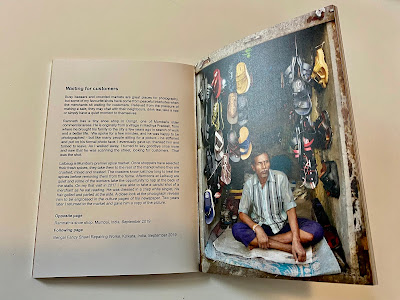
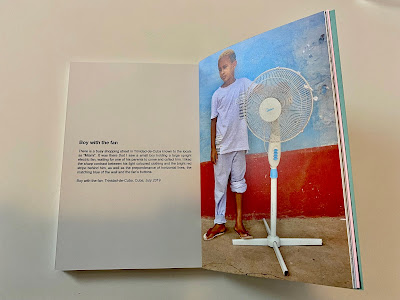
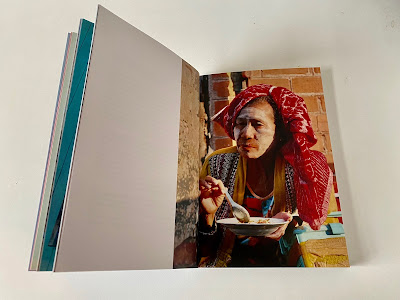
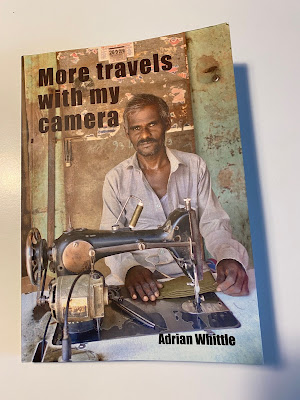
Next week, my new exhibition, More Travels With My Camera, opens at the Jeannie Avent Gallery in East Dulwich, London.  It includes photographs taken in Cuba, India, Myanmar and Peru between 2017 and early 2020. In early 2020 international travel became almost impossible and is only now, beginning to recover. Myanmar has seen violent and ongoing political upheaval and in Cuba there have been the first anti-government demonstrations for thirty years. It may still be some time before it is possible to revisit some of the people pictured in More Travels With My Camera. Until then I hope my photographs will bring their stories to a wider audience.


More Travels With My Camera opens at the Jeannie Avent Gallery, East Dulwich, London SE22 9EU on October 21st and runs until November 2nd. The gallery will be open every day from 10-5 and 10-6 on Fridays. 


The images featured in this post are from a book produced to accompany the exhibition, also entitled "More Travels With My Camera". It contains 36 full colour pictures and the stories behind some of them. Copies will be available for purchase at the gallery during the period of the exhibition or by emailing adrianpwhittle@outlook.com 


Monday, 19 April 2021

A Case Of Mistaken Identity - The Story Behind A Photograph

I first met the man I now know as Dilip Ghosh in September 2017. As I walked along Beadon Street in North Kolkata I noticed a chaiwallah serving tea to a long line of customers. Those who had already been served stood chatting in groups or sat squeezed onto a long bench busy with tea drinkers. The chaiwallah was an impressive figure with his neat black moustache and hair and off-white shirt. His stall was in front of a bright green building. A deep red garland hung on the shutters behind him matching the colour of the cloth wrapped around the kettle's hot handle. I caught his attention, indicated the camera and received the slightest nod of approval. He continued working whilst I took several shots and then showed him the best of them. He nodded again and continued pouring tea.

I ordered a chai and stood to one side whilst he prepared it. Whilst I waited a neatly dressed man, perhaps in his sixties, stepped forward and insisted on paying for my drink before asking me the usual questions about work and family. He said that he had worked for a British company before retiring on what he described as a comfortable pension. He invited me to sit with him and told me that the chaiwallah, who did not speak English, was one Mohan Lal and that like many other people in Kolkata, he was originally from Bihar. I scribbled these details into my notebook and referred to them shortly after whilst blogging about my time in Kolkata. 


I returned to the city a year later and looked for Mohan so that I could give him the picture. It took three days to find him. On this occasion, I was accompanied by a guide who told him we’d been looking for him and that no-one in Beadon Street had heard of him. The reason for this soon became clear. His name is not Mohan Lal and he is not from Bihar. He is Dilip Ghosh and he was born in Kolkata. Not only this, he had lived all his life there and had no idea why my erstwhile friend thought otherwise. I handed him the picture which he admired for a moment  before calling to his wife and son to come and look at it. Mrs. Ghosh was very excited and took it to show to customers and neighbours before requesting a picture of her and her husband.


Between my second and third visits to the city, I staged a small exhibition of my photographs in a series of London venues and used Dilip’s picture on the promotional poster. He now displays it behind his stall beside the calendar he produces annually and gives to his regular customers.


There is an odd coda to this case of mistaken identity. In early 2021 I posted the picture on my Instagram account. It received a positive response with many likes and new followers, but I soon noticed a series of laughing emojis in the comments box, some of them posted alongside Dilip’s name. I began to worry that I’d made a mistake of some kind or that I still had the wrong name. I googled “Dilip Ghosh” to try to understand what was going on. It seems that my favourite Kolkata chaiwallah has a namesake, a prominent West Bengal politician. The thought of him selling cups of tea had amused many of his constituents.


You might also like Travels With My Camera 2020 - The Best Pictures

Friday, 1 January 2021

Travels With My Camera 2020 - The Best Pictures

I had big travel plans for 2020. For obvious reasons most of them did not come to fruition, including a first time visit to Angola and a return to India. However, I did manage to travel a little before everything stopped. I spent a few days in Bangkok at the beginning of the year en route to my third visit to Myanmar. I also made my annual Israel visit but had to cut things short when it became obvious that air travel was grinding to a halt. This resulted in my doing significantly less photography than in previous years. It also meant that lockdown permitting, I spent some time in the streets of London looking for interesting shots much closer to home.

The pictures included in this post are some of my personal favourites from 2020. Others have been particularly well received on social media or at the exhibition I was able to hold at the Jeannie Avent Gallery in Dulwich, South London in August. This sixth incarnation of my Travels With My Camera show was the most successful so far. It was a great location and a rewarding experience. I enjoyed talking to visitors, listening to their feedback and learning from the advice of some of the more experienced photographers who came along. I had planned another exhibition in the cafe gallery of the Queen's Theatre in Hornchurch but this, like much else, fell victim to the lockdown.

Bilone and her grandson, Kasae Kum, Kayah State, Myanmar

Pop Nyat Khaing school for nuns, Loikaw, Myanmar 

Despite the disruption to my plans, 2020 provided me with some new experiences. In Myanmar I visited Kayah State for the first time and spent time in villages only recently opened up to overseas visitors. This included spending time with several members of the Kayah ethnic group who gave me free reign to photograph them going about their daily activities. The picture of Bilone with one of her grandchildren is perhaps my favourite picture of the trip, if not of the year. I was struck by the easy and obvious affection between grandmother and grandchild and how comfortable they were together. I also loved the way the light fell on Bilone's face, illuminating her love for the child. 

Still in Kayah State, I visited a school for young nuns in Loikaw. Many of the girls are orphans or from families unable to look after them. They are placed in the nunnery where they will be fed, cared for and receive at least some education. Many of the children were shy, but one girl in particular was fascinated by the camera. She grinned at me and pulled faces before turning back to her work. She then turned round once more just as a patch of light fell on the wall behind her. And that was the shot. 

Shy flower seller, Yangon

Breakfast at the wholesale fish market, Yangon

Yangon is one of my favourite cities and once again I enjoyed early morning expeditions to the various wholesale markets, photographing the workers going about their daily tasks as well as capturing some interesting portraits. I especially like the picture of the shy flower seller who was at first reluctant to be photographed, but then changed his mind and approached me whilst carrying a huge bunch of white flowers, hiding just a little of his face being them. The woman seen ladling food from her bowl in the picture below was enjoying her breakfast in the wholesale fish market when I saw her. The Yangon based watercolorist and my good friend, Sai Pyae Sone Aye, used this photograph as inspiration for one of his beautiful works. I look forward to seeing it next time we meet.

Still in Myanmar, I visited the city of Mawlamyine for the first time. I happily spent a couple of days wandering through its narrow lanes and markets and am keen to return at the earliest opportunity. It was here that I came across a young man working on a new well, pumping muddy water from the ground in an area where instant access to clean water is not guaranteed. He is pictured below.
A new well, Mawlamyine, Myanmar

Alone in a crowd, Meah Shearim, Jerusalem, Israel

I love portrait photography and am especially attracted to informal portraits where the subject has less opportunity to hide their true mood or feelings. I particularly like three portraits from 2020. The first is of a young Jewish man taken during the Purim celebrations in Meah Shearim, Jerusalem. This is an ultra-Orthodox neighbourhood and photography is normally unwelcome there, but during Purim with the right approach and some contacts it is possible. Purim is a chaotic time in Meah Shearim. People wear costumes or disguises and alcohol consumption is encouraged - at least amongst the men. This young man seemed alone in the crowd, slightly apart from the celebrations and although physically present, somehow absent. I wonder what his story is.

The second portrait I've chosen from last year is of a little girl in Bangkok. I noticed her sitting with her grandmother on the step of a shop house in the Klong Toey market. Noticing the camera, and much to her grandmother's amusement, she began to laugh, wave and pose before finally leaning standing quietly against the house gate which framed her face perfectly. In this quiet moment she is somehow similar to the young man in Jerusalem, lost in thought, no longer with us.

My third choice is a portrait of Bilot, another Kayah woman and friend of Bilone featured in the picture at the top of this post. I spent some time talking to her before taking the camera out. She was optimistic and funny. She offered me home made rice wine and betel leaf and teased me about traveling alone. I think this portrait captures the self she showed me during our conversation.

The dreamer, Klong Toey, Bangkok, Thailand

Bilot laughing, Kasae Kum, Kayah State, Myanmar

On the way to the flea market, Sclater Street, London

After my Myanmar/ Bangkok and Israel trips I had a long spell where I hardly picked up my camera. I fell ill in late March and took several weeks to recover and of course, the national lockdown much reduced the opportunity for my preferred kind of photography. However once the initial lockdown was lifted, I made several weekend visits to Spitalfields, close to my home in East London. The Sunday fleamarket market and nearby shops act as a magnet for many young, fashion conscious visitors. They also attract many local people who have lived in the area either their whole life or for many years. The pictures above and below were taken in Sclater Street near the market and represent the different audiences it attracts. 

On the catwalk, Sclater Street, London

I originally intended to include just ten pictures in this post but whilst drafting it I decided to indulge myself and include two more shots from my time in Jerusalem. One shows an ultra-Orthodox Jewish boy entertaining himself whilst his father (not pictured) says his prayers at the Kotel (also known as the Western Wall and the Wailing Wall). I liked the interplay between the lines on his sweatshirt and those of the stacked chairs, as well as his stylised movement. The second picture is of a teenager, sunlight on his face and the worse for wear after over indulging at Purim. 

When you get bored waiting for your dad, Jerusalem, Israel

Too much to drink at Purim, Meah Shearim, Jerusalem, Israel

Thank you if you came to my Jeannie Avent Gallery exhibition, or if you follow me on various social media. I hope to see you again soon. Happy New Year to everyone.

If you are interested in any of these pictures please contact me at adrianpwhittle@outlook.com

You might also like Purim in Meah Shearim or Meeting the Kayah Women of Myanmar

Follow me on instagram or Flickr 

Please note: All rights reserved. None of these images may be reproduced, stored in a retrieval system, or transmitted in any form or by any means, electronic, mechanical, photocopying, recording or otherwise without my prior written permission.

Monday, 6 April 2020

Picture post 73 - Purim in Mea Shearim

On March 11th I was walking the streets of Mea Shearim in Jerusalem, camera in hand, witnessing its Ultra Orthodox community celebrating Purim. A lot has happened since then and life has changed so much that rather than a few short weeks it seems like months ago. Two days later as the situation rapidly deteriorated with more and more cases of the coronavirus being reported and restrictions on movement and travel beginning to be implemented, I cut my trip short and came home. I had planned to write about my time in Mea Shearim soon after my return but I fell ill with the virus and was unable to do anything much for a couple of weeks. I am much better now and bit by bit am able to resume my normal activities.


Mea Shearim is one of the oldest Jewish neighbourhoods outside the walls of the old city of Jerusalem. The name literally translates as one hundred gates but can also be understood as one hundred fold. Founded in 1874 it was funded through a partnership of 100 share holders who purchased land outside the old city in order to escape the poor sanitation and to live in a healthier environment. The contractors for the project were Yosef Rivlin a prominent member of the Jewish community who worked with a Christian Arab to construct a courtyard neighbourhood surrounded by a wall, the gates of which were locked every evening. 


Today the area is populated almost exclusively by different groups of Haredi, ultra-Orthodox Jews who strictly maintain religious laws, wear modest clothing and generally live separately from the the rest of society. This separation includes rejecting many aspects of modernity, including as a rule, photography. However on certain occasions it is possible to enter the neighbourhood to respectfully and discretely take pictures. However to is not acceptable to take portraits without permission and if people signal that they do not wish to be photographed it is my strong advice to respect that.

Purim is one of Judaism's happier festivals, celebrating the survival of the Jews in ancient Persia and the foiling of a plan to exterminate them. It is celebrated rigorously, almost riotously in  Mea Shearim. Many people take part in the tradition of wearing a disguise or costume, the many yeshivas (schools focusing on the study of religious texts) hold mass celebratory events in the presence of important rabbis and some of the men of this normally sober community indulge heavily in the consumption of alcohol.


As I walked the streets of the neighbourhood with a photographer friend we met with a variety of responses. Some people hurried away or covered their faces when they saw the cameras. One or two called al tetzalem b'mea Shearim - do not take pictures in Mea Shearim, whilst others were curious, wanted to talk a little and in some cases were happy for a portrait to be taken. Most interesting were some of the children who having seen us, would approach, not speaking but inviting us to admire their costumes and to photograph them by standing and posing in front of us, such as the boy in the clown suit pictured above. 


Perhaps the highlight of my time in Mea Shearim was spending an hour in a particular yeshiva where hundreds of Haredi men stood swaying, chanting and singing in the open air on bleacher style seating whilst the rabbis sat at an elevated table observing the proceedings. The singing could be heard several streets away, strong, loud and beautiful. Arriving in the grounds of the yeshiva I first entered a refectory where food and copious amounts of wine were laid out on a series of tables. Several of the men looked the worse for wear including boys perhaps as young as ten or eleven, some of them collapsed on the floor whilst others had over indulged so much that they were physically ill in the courtyard. One or two became very loud from the alcohol, dancing, falling and in some cases collapsing. In the midst of this I noticed a young man wearing an immaculate kaftan (coat) and cap who had perhaps the saddest eyes I have ever seen. Standing alone he seemed preoccupied and apart from the others. He is pictured at the top of this post.

Back in the streets we came across family groups on their way to visit relatives, the children all wearing costumes. Looking up we noticed many small children playing on balconies and watching the activity below with much interest. We also met Shmuel aged 12 who was looking after a bakery but was happy to pose for us. I asked him if the bakery belonged to his father. He said it didn't and that he didn't want to say who owned it. The residents of Mea Shearim are often suspicious of outsiders which probably explains his answer.

Back home and in lockdown, I have no idea when my next expedition will take place. In the meantime readers are welcome to follow my instagram account  or Flickr page.