Sunday, 17 February 2013

London Art Deco - Part two, city streamline moderne and a sculptural controversy

Just one week on from my pilgrimage to London's art deco buildings from Southgate to Selfridges, I hit the road again to take a look at some more treasures of that most stylish genre, including some of London's best remaining examples of streamline moderne - a style that grew out of art deco, but rejected some of its more decorative elements. Some key features of the style include rounded edges, corner windows and smooth exterior surfaces.

London Art Deco by Yekkes

My first stop was Ibex House (pictured above and below), which is probably my favourite London building.  Tucked away at 42-47 The Minories, between Tower Hill and Aldgate, this huge structure was designed by architects Fuller, Hall and Foulsham These three also designed Blenstock House, the Bonhams building in the west end and which I wrote about here - and which was built in the same year as the Ibex. The Ibex is nine storeys high and clad in beige faience with the longest strip windows in London. It's curved walls were inspired by Erich Mendelsohn's Berlin Schocken department store. Walking along the Minories from Tower Hill, one is struck by its exquisite curves and clean lines and looking down either Hayden Street or Portsoken Street, there are additional treats in store with the spectacular glazed central stair turrets.

London Art Deco by Yekkes

Today, Ibex House houses a number of businesses including a pub, a branch of a gym chain and a small Italian cafe which served me the strongest cup of coffee I have had in a very long time. The cafe retains what appear to be a number of original features in chrome and glass but best of all is the curved glass entrance that reminded me a little of the glazing on the former Simpson's Department Store on Piccadilly - now Waterstones. The cafe is a London style "caff" that sells "English breakfasts" as well as a selection of popular Italian treats and sandwiches. I am sure I can still feel the impact of that coffee - two days later. Great.

London Art Deco by Yekkes

Moving on, a quick journey on the District Line from Tower Hill to Chancery Lane station followed by  a short walk took me to Fleet Street, once the heart of Britain's newspaper industry. Most of the newspapers left in the 1980's - remember the mass picketing to oppose the moves from Fleet Street to Docklands and the increased automation of the printing process? Reuters held on until 2005 but the others were already long gone by then. What does remain however are some examples of art deco/ streamline moderne architecture that are still referred to by their former function.

The former Daily Express and Daily Telegraph buildings neighbour each other close to the Farringdon Road intersection of Fleet Street. My favourite of the two is the streamline moderne former Express building (pictured below), at number 133, built from 1930-32 and designed by architects Sir Owen Williams with Ellis and Clarke. The exterior features black vitrolite and a glass facade - which retains the  "Express" name at ground floor level. I understand that the interior includes an incredible art deco entrance hall. Unfortunately this is off limits to all but employees and people with appointments. The interior relief panels were sculpted by Eric Aumonier, creator of the archer at East Finchley station.

London Art Deco by Yekkes

Today, both the  former Express and Telegraph buildings belong to Goldman Sachs. The old Telegraph  headquarters retains its colourful art deco clock hanging over Fleet Street, telling the time for city workers and tourists passing on open top buses. However the "Telegraph" legend has been removed from it, as has any clue to the former use of this building.

Turning off Fleet Street and along Farringdon Road towards the river leads to the new Blackfriars Underground Station which is just a few stops from St. James Park on the District Line and home to Broadway House, the nerve centre of London Underground. The station itself and the small shopping arcade leading to the platform retain a number of deco features, but the real treasures here are the sculptures on the exterior of the building. The upper levels of Broadway House are graced with sculptures by Henry Moore, Eric Gill and Samuel Rabinovich - but unfortunately these are so far up that its difficult to spot them and just about impossible to see the detail. Incidentally Rabinovich was an interesting character who in addition to being an artist was an Olympic bronze medallist, representing the United Kingdom at the Amsterdam Olympics in 1928 - in the wrestling competiton!

London Art Deco by Yekkes

The real stars are a pair of sculptures by Jacob Epstein - Day and Night. Commissioned by Charles Holden to create these two pieces, Epstein was a controversial figure, subjected to vicious criticism for his work which often fell over into anti-semitism - this was the late 1930's after all, and the British press had its share of fascist supporters at this time. Once unveiled the sculptures caused a storm of controversy, one London Transport Passenger Board member board member offering to pay to have them removed, and Epstein being required to remove one and a half inches from the penis of the naked figure on "Day" (pictured above) before the furore died down! Its hard to believe that these two wonderful pieces could have excited such opposition. I particularly like the hooded figure of "Night" (pictured below) above the northern entrance. The Daily Express begged to differ describing it as "a prehistoric blood sodden cannibal intoning a horrid ritual over a dead body". Perhaps this says more about the "critic" than it did about the piece.


London Art Deco by Yekkes

My final treat on this particular tour was a short walk away from Broadway House along Victoria Street - the Apollo Theatre, currently showing the musical "Wicked" in case you are interested, but which started life as the New Victoria Cinema. Built from 1928-1930, the theatre was designed by architects Ernest Warmsley Lewis and William E.Trent. Its hard to get a really good view (or photograph) of the theatre at the moment as the whole of this part of Victoria is a building site, but  did get some shots of the two art deco silvered bas-relief panels depicting two distinct film genres on the exterior above either side of the exit doors. Both panels were the work of Newbury A. Trent - brother of one of the architects. A detail from one of the panels is pictured below.


London Art Deco by Yekkes

Monday, 11 February 2013

London Art Deco - part one

A couple of years ago I bought a great little book called London Art Deco, by Arnold Schwartzman. Since then I have been planning to visit several of the buildings covered in the book and last week I finally managed to organise myself enough to make a start.

I have always been a fan of the London Underground - "the tube" and decided I would start by visiting some of the wonderful art deco influenced stations built during a great surge in the network's development in the 1930's. This meant starting with a long journey from my home in East London to Southgate, just three stops from the very northern most station on the Piccadilly Line.  Southgate is one of a number of stations designed in the 1930's by the great Charles Holden. Working under the leadership of Frank Pick, the visionary commercial manager of the then London Electric Railway Company and inspired by the red brick designs of the Dutch architect Willem Marinus Dudok.

London art deco by Yekkes

Southgate station, opened in 1933, is one of Holden's proudest achievements. Built in the art deco/ streamline moderne style, the station building is circular with a flat projecting concrete roof. Perhaps the most outstanding external feature of the station is located on the roof - an illuminated feature resembling a tesla coil. Despite the loss of one of the three original entrances to accommodate a modern ticket office, the station retains its 1930's feel with a beautifully up-lit escalator and ceramic tiled lower hall. The station has been used to film numerous period dramas including scenes from the 1999 film adaptation of Graham Green's "The End of the Affair". It took about an hour to reach Southgate from home, and I arrived a little thirsty. I was very happy to find a small cafe opposite the station serving great coffee, home made cookies and cakes as well as soups, salads and other light meals. Friendly staff and free wi-fi made this a great little find. The Harris and Hoole cafe is one of a small chain of cafes across north London.

Suitably refreshed I jumped back on the tube to travel just one stop south to Arnos Grove, another of Holden's stations. Built from 1932-33, the dominating feature of this station is the central red brick "drum" which gives an almost monumental height to the ticket hall. The drum is said to have been inspired by Swedish architect, Gunnar Asplund's design for the Stockholm City Library built from 1920 to 1928. I was able to visit the Stockholm library a few years ago, for work reasons, and can see a clear likeness. The ticket hall is lit by a number of high level windows and there are some art deco features inside the station - the up-lights on the bridge between platforms and the bannisters from the bridge to the track side. Someone needs to give those lights a bit of a clean.

London art deco by Yekkes

Back on the tube again for one more stop south, getting off at Bounds Green Station, designed by C.H. James, a colleague of Holden, and opened in September 1932. The station has a few interesting features, including an (inaccurate) plaque remembering the 17 people killed in 1940 when the station was hit during a German bombing raid. From Bounds Green I took a short bus ride to my favourite London Underground station - East Finchley on the Northern Line.

London art deco by Yekkes

East Finchley opened in 1939, and is another Holden designed structure. I like this station for a number of reasons. I love the curving, narrow, white painted waiting rooms on the platforms (pictured above), referencing the often used nautical theme of art deco architecture. These buildings would not look out of place in Tel Aviv or even Eritrea! I also like the semi-circular glazed stairways leading to the enclosed bridge over the tracks where the station offices are located. East Finchley station is well known for it's 10 foot tall sculpture of a kneeling archer, executed by Eric Aumonier and visible from the main road as well as from the end of the south bound platform. Known affectionately to locals as "Archie", he is said to commemorate Finchley's historical association with hunting in the nearby Royal Forest of Enfield, whilst I am also advised that there was once a sculpted arrow at Morden Station - the southernmost end of the Northern Line - courtesy of Archie. East Finchley's Phoenix Cinema is just across the road from the station and has some art deco features - mainly in the auditorium which features attractive freezes


From East Finchley, I again headed south on the Northern Line to Mornington Crescent in Camden to view the stunning former Carreras cigarette factory, now the Greater London House. Built from 1926 - 1928 (and originally known as the Arcadia works) for the Russian Jewish inventor and philanthropist, Bernhard Baron, the building was designed by M.E. and O.H. Collins and A.G.Porri. It is a very large building - 168 metres long and dominates this part of Hampstead Road. Best known for its two black cats that stand guard over the main entrance, the Carreras building was once home to the Black Cat cigarette factory, it also sports beautiful and brightly coloured painted details - including giant leaves at the base of the front columns and the faces of a row of black cats at the upper level. All of this is set against a striking white background.

The original design included a solar disc to the Egyptian Sun god - Ra but when the factory was converted into offices in 1961, this and several other features, were lost. A renovation in the 1990's restored much of the detail and the two current (replica) black cats appeared. The original Egyptian theme was inspired by the uncovering of Tutenkhamun's tomb in 1922 leading to a demand for this style which was played out in Hollywood movies set in ancient Egypt and demonstrated at the Paris Exhibition of 1925. The architects also drew inspiration from some of the treasures held in the British Museum, whilst commercially, the cigarette company used the imagery to imply luxury in their advertising. This was born out by the somewhat outrageous opening of the building which apparently included covering the pavement in front of the building with sand to resemble the Egyptian desert, a procession of the then cast of a production of Aida around a temple structure - in full costume of course, and get this, a chariot race on Hampstead Road!

London art deco by Yekkes

From Mornington Crescent to Oxford Circus is a short tube journey and I was soon in the heart of the west end, where there are also some art deco treasures. Turning left from the Argyle Street exit and walking towards Liberty's department store, Palladium House (pictured below) is situated on the junction of Argyle Street and Great Marlbrough Street. (Incidentally, Liberty is also worth a quick look - there are some interesting features from the 1930's still to be found if you look hard enough - and there are often items of furniture from this period on sale on the top floor!).

At first glance this looks like a very simple, if very shiny, black building. In London we say one should "look up" to see the interesting things and this building is an example of that. The shiny black granite cladding is topped with persian style enamel on bronze decoration produced by the Birmingham Guild of Handicraft. Built in 1928 and originally called Ideal House, National Radiator Building it is the work of architect Raymond M. Hood with additions from Gordon Jeeves in 1933. It was modelled on the American Radiator Building in Bryant Park, Manhattan whilst the colours - black and gold - were the colours of the company.

The ground floor is now home to Garfunkels, a spectacularly uninspiring chain restaurant, but look above the windows and the entrance on Great Marlborough Street for the easier to see decoration. The black cladding led to the building being referred to as the "Moor of Argyle Street" in its early days.

London art deco by Yekkes

Walking back up to and along Oxford Street towards Bond Street, there is a small side passage called Woodstock Street. Looking straight down from the main road there is a vision of loveliness in the shape of the Bonhams building, also known as Blenstock House (pictured below).  It features a curved stair tower to the left and a three bay elevation set back to the right. This beauty was built in 1937, designed by architects Fuller, Hall and Foulsham. These three also designed the extremely modern looking building  - Ibex House in the Minories near Tower Hill, which I have pencilled in for another day.

Blenstock House takes its name from fusing the names of the two streets it straddles - Blenheim and Woodstock. It was originally the home of Phillips auctioneers, which was bought out by Bonhams in 2001. The original tenants also included Berker Sportcraft Limited - a sportswear manufacturers, who were succeeded by a variety of other tenants until Phillips took over the entire building in 1974. This lovely building doesn't feature in my little book by Mister Schwartzman and when asking friends about it, few could picture it - but its one of my favourites.

London Art Deco by Yekkes

It was beginning to grow cold at this point and rain looked a distinct possibility, but I couldn't resist a little look at one of the west end's loveliest sights - the fabulous clock that stands guard over the main doors to Selfridges (pictured below), just a bit further on from Bonhams. Selfridges is a great weakness of mine - clothes, cafes and several floors of temptation, but I resisted going in and instead finished my tour with a photograph of the clock. The store opened in 1909 thanks to the American millionaire entrepreneur, Gordon Selfridge so it was a bit early perhaps for art deco - but the Queen of Time riding in the ship of commerce designed by British artist Gilbert Bayes has some definite deco features. And anyway, its just great.

Sometimes I forget that you can also be a tourist in your own city. Big thanks to Mr Schwartzman for his book - and more plans being hatched for further tours - there's lots more to see yet!

London Art Deco by Yekkes


Wednesday, 6 February 2013

Travel unplugged - the darker side!

Travel is my absolute passion. From being very young I had a strong desire to travel to different places and to see the world. I was brought up in an extremely small and non-cosmopolitan seaside town in the north-east of England and had early anxieties about never being able to travel abroad. My aunt, uncle and grandparents went on a Wallace Arnold coach tour of Austria, Switzerland and the Netherlands when I was about ten years old. I loved going to my aunt's home to look at the travel brochures from the holiday and would set them out on her kitchen table, pretending to have my own travel agency! Yes, travel was the most wonderful thing, impossibly exciting and insanely glamorous.


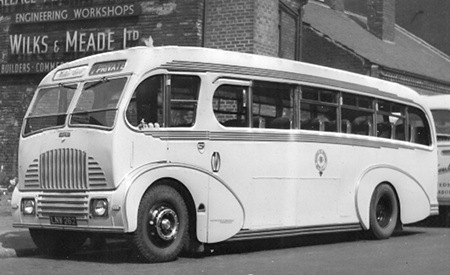
Wallace Arnold Tours - Leyland Tiger - LNW 262


Of course, travel can be all of these things and for the most part its great. However, it also has a darker side. I learned this quite early on when I went to Scotland with my parents at age 12 and stayed for one night in a small hotel just outside Edinburgh. The hotel provided my first glimpse of the "seamier" side of travel as there were a number of mushrooms growing in the shower tray. The hotel made great play of its locally grown mushrooms on its breakfast menu. I gave them a wide birth.

Many (many) years later, I went with a friend on my first visit to Paris. A bit green, we arrived without a hotel room and spent a morning looking around the Marais for somewhere we could afford to stay. We eventually settled on an Algerian owned place where we were told we had to be in the hotel by 11 p.m. as the door would then be locked. This seemed a bit onerous but growing tired of tramping the streets we took it, dumped our bags and went out. Returning in the evening we found we had been moved to another room where the bathroom had clearly been the scene of a death of some sort as the stench of decay was overpowering. Desperately tired, we opened the window and went to bed. Packed and ready to move in the morning we went in for breakfast - which consisted of coffee, jam and butter. And that was it. No bread. No nothing.

These days I am well able to handle situations like this and have rather more cash at my disposal which helps. However, there are other shocks and horrors that even the most seasoned traveller can experience. One of my pet "problems" in a range of countries is the over familiar guide or driver. The vast majority of people working in the travel industry are polite, helpful and appropriately friendly. But, from time to time, some of them can become a little too comfortable. I know why this happens. If you are spending long stretches of time with people, over a number of days, driving from one part of a country to another, the conversation can stray into more personal territory - are you married? do you have children? why did you get divorced? how much do you earn? With some carefully constructed responses it is possible to close the questioning down or change the subject. Much more difficult is to stop the supply of personal information from you companion. Perhaps my favourite was "I like ladies with big bottoms" which came totally unsolicited from a driver in an "eastern" country.

It also happens that once comfortable with the client, your host will allow little prejudices to slip out, expecting your agreement. This frequently strays into what would be deemed racism if coming from the mouths of people in the west. My most "interesting" examples include being asked if I had ever been to Hungary and when confirming I had, being told that "the country is full of Jews who are all wealthy and control all of the country's financial institutions". This and similar statements come as an unwelcome shock and any kind of response can be extremely difficult if you are travelling alone with a guide or driver. My usual approach is either to ignore the remark and move the conversation on by "spotting"something interesting on the roadside or responding with something along the lines of "I don't know anything about that" or "that hasn't been my experience".

Food can be another tricky issue. I don't eat meat. Explaining that in some countries can be a little difficult. A long (long) time ago in Madrid I ordered "vegetarian rice" from the menu in a small restaurant not far from Plaza Mayor. The dish arrived. I looked at it and wondered what the dark pink diced things were. I poked them with a fork. They looked like meat. I called the waiter and told him I had ordered vegetarian rice. He agreed I had. "So what's this" I asked him pointing to the pink spongey stuff. "Ham", he said with a smile. "But I ordered vegetarian rice" I said, a little bemused. "Yes, that's right" he said. "So why the ham then?" I asked. "To spice it up a little" came the reply. I gave up and shoved the offending substance to the side of the plate.

Menus can hold some surprises too. On a visit to Prague in the early 1990's, not long after the fall of communism, I went to the French restaurant in the now beautifully restored Municipal House known as the Obecni Dum in Czech. I looked at the menu. A lovely onion soup starter. Yum. Scanning the menu for a vegetarian main course I thought I was mistaken, but having checked several times I noted that a poultry dish, strangely listed as "vegetarian" was on offer. Strange enough, but stranger still was the full description. "Chicken breast, roasted vegetables and two turds". Gosh. Two of them.

Which brings me to language. The British are renowned for being more or less crap at speaking other people's languages. Me included. But I do like to try. I spent six months in Thailand back in 2001/2. I went to school to try to learn spoken Thai - the written format was just too hard for me. I struggled a bit as Thai is a tonal language, with five tones. This means that some words that sound the same to an untrained western ear can have completely different meanings depending on the way they are pronounced. During my time in Thailand I was a major target for heavy duty mosquito bites. The itching was terrible and the family I stayed with gave me a soothing balm that helped a lot. The mother of the house, who did not speak English was the keeper of the balm. One particularly itchy evening the older children of the house told me to knock on their mother's bedroom door and ask for the antedote, reminding me of its name. I knocked, she answered, I said what I thought I had to say. She looked surprised and said nothing, just stood staring at me. I said it again. She looked confused. A third time and she called her son. A short conversation ensued and he asked me what I had said. I told him and he laughed out loud. You have just called her a Burmese cu-t he said. Right words, wrong tone. Oh dear.


Friday, 25 January 2013

Prisoners of War - Hatufim

hafutim-keshet


Over the last four nights I have watched all ten episodes of the first series of the Israeli TV drama - Hatufim (חטופים). That's 495 minutes. I have found it hard to break away from the screen.  I have found it hard to sleep after watching. This first series of the programme, shown in  Israel in 2010 is a stunning drama about three Israeli soldiers kidnapped in Lebanon in the 1980's and held in Syria for 17 years before being handed back to the Israelis.

There are stunning performances from Yoram Tolledano as Nimrod Klein, Ishai Golan as Uri Zach and Asi Cohen as Amiel Ben-Horin, the three prisoners. Equally impressive are Yael Abercassis, Mili Avital and Adi Ezroni as the leading female characters - wife, ex-girlfriend and sister respectively of the three men. For more than eight hours the elation, tensions and devastation of their release, homecoming and flashback experiences have been played out on my TV screen.

The release and homecoming might be considered as a "happy ending" but believe me, this in no easy watch as the appalling torture of the men flashes across the screen and as they find it increasingly difficult to adapt to being "free". Equally hard is the struggle of the families to adjust to the return of a son, husband or brother who they no longer know and cannot understand. During a heart to heart with a friend, Yael Abercassis playing the role of Talya Klein, Nimrod's wife says "I have been in prison for 17 years too" as following her husbands's release they struggle to adjust to each other. The Klein children also struggle with their father's return - the daughter by displaying increasing hostility to the mother and the son by openly wishing the father would leave.

Equally interesting are the campaigns, dilemmas and struggles surrounding the release of prisoners of war  -  a very big issue in Israel. Inevitably Israel has to "pay" to get their people back through releasing convicted terrorists. There is a cameo role in the series of a man whose wife and daughter were amongst those killed in a restaurant, suicide bombed by a palestinian terrorist, and the mastermind of the attack is one of those freed to release the three prisoners. His description of the day of the attack and his last conversation with his wife is devastating. Not only do we see  opposition to the release of the soldiers, we also see suspicion of them as the security forces "rehabilitate" them through intensive debriefing and continue to monitor their activity once they return home for good.

The story is gripping and each episode left me anxious to see the next one. There are several threads running through the story that lead to a surprising denouement. A second series was made. I hope it will become available on DVD. Hatufim attracted the biggest ever TV audience in Israel with over 3 million people viewing one of the episodes - there are only about 7 million people in the country. Directed by Gideon Raff, the Hebrew title translates as "abductees" but the English subtitled version of the series is available under the name "Prisoners of War". The series was the inspiration for the US series "Homeland".

The world knows about the release of Gilad Shalit, kidnapped from Israel and held in Gaza in October 2011 after five years in captivity, having been taken at the age of 18. Rather less people know about the five who remain in captivity. They are Zechary Baumel, Zvi Feldman and Yehuda Katz all missing since 11 June 1982 in a battle at Sultan Yakoub, Lebanon: Ron Arad captured in 1986 when his aircraft was shot down near Sidon also Lebanon and Guy Hever who disappeared in 1997 in the Golan Heights. Their whereabouts, or even if they are still alive, is not known.

Israeli television is turning out some of the most impressive original drama, not just with Hatufim, but also with B'tipul (בטיפול) the inspiration for the US "In Treatment series, Srugim (םרוגים), the "30 Something" of modern religious Jerusalem and Ramzor (רםזור) - a cracking comedy with an excellent cast. You can hear more about Israeli TV at the Jewish Book Week on Saturday 2nd March when Sayed Kashua and Ron Leshem discuss what makes Israeli TV drama so compelling.

Sunday, 20 January 2013

Salman Rushdie - Joseph Anton, a memoir


Phew, I got to the end of it. All 633 pages. But first a confession - its the first Salman Rushdie book I have read. I read it for the same reason as most other people will read this autobiographical work - to get the inside version of his years in hiding following the fatwa served on him by the dying ayatollah Khomeini in Iran in 1989 for alleged insult to Islam in his book "Satanic Verses".


The title comes from the name he chose to live under whilst in hiding. Its a composite of the forenames of Joseph Conrad and Anton Chekhov. The early part of the book covers his young life in India, arrival in the UK and his years at public school and university, his parent's unhappy marriage and his estrangement from, and deathbed reconciliation with, his father. I enjoyed this part of the book and found his immersion in all things English at university extremely interesting, but the focus of this story begins with the publication of Satanic Verses in 1988, the subsequent death threat and more than a decade of living in hiding.

He takes us from the early days of living under threat and constant moving from one "safe" house to another through years of living with government security agents in his home and the restrictions placed on him during this long period. He moves through a range of emotions from disbelief and shock, hope and despair, concerns about the safety of his family and those around him to a desire to be free of all security arrangements and to live as he did before the fatwa. He conveys such a feeling of claustrophobia in the middle years of his isolation that I could almost feel it myself.

Joseph Anton also tells the story of the reactions and behaviours of a huge cast of characters involved in or on the edge of this drama. There is both bravery and cowardice in the publishing world with delays in publishing the paperback edition of Satanic Verses due to fear of reprisals - and there were some very real threats - book burning in Bradford, attacks on shops in a range of countries, the Japanese translator stabbed to death and the Danish publisher surviving being shot three times. There were riots in a number of countries, notably India, the country of his birth and where a number of people died during the disturbances - killed by other protestors who almost certainly had neither read the book nor knew who Rushdie actually was. His book was banned in India for several years and he was not allowed to enter the country.

The responses of politicians and the literati to his predicament makes for interesting reading. Keith (now Lord) Vaz, former MP for Leicester called him a few days after the fatwa was served to offer his support, only to address a protesting mob a few weeks later to tell them they had reason to protest the alleged "insult". Political opportunism of the worst kind but no surprise - and he wasn't the only one. The book inadvertently traces the political history of the UK during the last twenty years or so. Thatcher was still Prime Minister when the affair began and we get a glimpse of how other politicians - Hurd, Waldegrave, Major and then Cook and Blair responded to events. Although the Labour government were more helpful, no-one covered themselves in glory and the Iranians were able to give successive governments the run around for a number of years.

Rushdie also gives us a glimpse of the world of the literati and intelligentsia. Whilst a number of its luminaries sprang to his defence and helped him - Susan Sontag, Nigella Lawson, Harold Pinter, Bernard-Henri Levy, Carlos Fuentes and a whole list of others are mentioned in despatches - others were either stand offish or downright unhelpful - John le Carre, Jack Derrida and Arundhati Roy who treated him with contempt and who eventually had her own troubles in India.

I found the book interesting, but I didn't warm to its author. Most of the book is written in the third person, presumably to distance himself from being Joseph Anton and resuming his true identity, but it also distances him from some of the less pleasant aspects of his character. He displays astonishing intolerance for his third wife Elizabeth just after the birth of his second son, Milan as well as constantly criticising the security forces for restricting his movements - sometimes seeming to forget that he is restricted by the supporters of the fatwa and not by those protecting him. Then there is his very one-sided reading of the break-up of his relationships with his wives and the delicious display of jealousy over the departure of the (frankly tedious) Padma for a man even older than him. Despite everything, he managed to go on writing during this period which is something of a feat given the regularly restated death threats against him.

The Rushdie affair was a pre-cursor of what was to come a decade or so later, with the 9/11 attack and subsequent escalation of Islamist activity and attacks on not just the west but anyone not accepting the Islamist world view. We should have learned lessons from what happened to the author about the imperative to stand up to attacks on liberty and values long since hard won including the right to offend. Rushdie ends his book on a note of hope for the "Arab Spring", specifically mentioning Egypt, Tunisia, Libya and Syria and the possibility of a better future. The book was published in early 2012. I wonder what he thinks now.

Wednesday, 16 January 2013

HMV - RIP


I suppose it had to happen. HMV, the last major music store has had it. It has been coming for some time - any regular visitor to the flagship store on Oxford Street will have noticed the rapid decline in the amount of stock on display over the last few years and the gradual creep of t-shirts, "toys", low quality books and assorted crap as the company desperately tried to keep afloat. It reminds me of the rapid and sad decline of Border's book shop which followed a similar pattern. It also reminds me that my recently visited home town (Redcar) no longer has a music shop - Tony's Records a terrific little independent store folded years ago and Alan Fearnley's in Middlesbrough, a treasure trove for fans of black music, and to which I made a weekly pilgrimage in my teens, is also becoming a distant memory. The end of the music shop seems to have arrived.

I am one of those responsible for the decline in HMV as for the last couple of years I have begun to purchase more and more of my music from Amazon, but Amazon can't offer me opportunities to browse and handle music (and for that matter film too) before I buy it. I don't respond well to change in this area - it took me a long time to accept that vinyl was dead. I have a large collection of vinyl albums, 12" singles and 7" singles that I built up from the age of 10 to the early 1990's when reluctantly I accepted that CDs had ousted my beloved "records". I no longer have a turntable but I won't be getting rid of my vinyl and from time to time toy with the idea of getting myself a "record player".

The turning point for me was when I tried to buy an album called "Jazz on a summer's day" in that same Oxford Street branch of HMV and was told it was only available as a cassette (remember them?) or on CD. I had no CD player at the time so had to buy the cassette - which I also still have and also have nothing to play it on anymore. My problem was that I felt a CD didn't give me the physical relationship with the music that a vinyl disc gave me - the sleeve art, the lyric sheet or the libretto in the case of classical music. Over time, CD sleeves provided all of this and more and I was totally won over. The idea of downloading something from the internet to an i-pod or an i-phone or an "i" something else, with nothing to handle or show for my money does not appeal. At all. But then I have an i-pod with several of my CD's downloaded onto it.

It may be that some branches of HMV will be bought out and rescued but they will never have the range of stock and opportunity to discover new artists and different types of music that they did in the past. I still feel nostalgic for Tower Records at Piccadilly Circus, with its late night opening, massive stock over several floors and humungous jazz collection. We also lost Virgin which became Zavi (?) or something like that and is now gone completely - turned into branches of Primark and other crap stores.   What a way to go.


Saturday, 12 January 2013

Nicola Conte - more than entertainment at Ronnie Scott's


Last night Nicola Conte told a sell-out house at Ronnie Scott's that he (and his combo) were hoping to provide us with more than "just entertainment". He wanted to make the audience feel something. It was an interesting introduction and 90 minutes later, it was safe to say that he had achieved his goal.

I came to know his music only recently and have been won over by his eclectic mix of reworked 1950's and 1960's jazz classics, Brazilian tunes, the bossa-nova feel to much of his work and quirky numbers such as Fuoco Fatuo. I have also admired his use of female vocalists and his version of the standard Charade featuring Berlin based Lisa Bassenge is constantly on my i-pod at the moment. Last night was a little different as the team worked their way through a a number of songs from his Love and Revolution album of 2011.

There were a lot of people on the stage. As well as Nicola on guitar, we were treated to the fabulous piano playing of Pietro Lusso, Sardinian Francesco Lento - who was outstanding on trumpet, Helsinki native Teppo Makynen on drums, Gaetano Partilipo on saxophone and Paolo Benedettini on double bass. Five Italians and one Finn, all in tailored dark grey suites and ties - the epitome of European jazz cool. Makynen's drumming was accompanied by the most surprising facial expressions - groans, grins and grimaces whilst Conte maintained an almost detached concentration. After the opening two numbers, the musicians were joined on stage by vocalist Bridgette Amofah.

Although a little drowned by the band at times, Ms. Amofah gave an excellent performance in front of the most discerning jazz audience in London. She particularly shone on Max Roach's Freedom Day, Love From the Sun (once recorded by the great Norman Connors) and Conte's own composition, Love and Revolution. Freedom Day was an outstanding number not just for the excellent vocal, but also for the ripping, soaring, shrieking sax and trumpet duet at the beginning between Partilipo and Lento. Terrific. They also stole the show during the closing number Love and Revolution with a lengthy workout before Ms Amofah came back in to close things down. It was an appropriate choice of songs to end a set that had begun with Mr Conte's reference to the importance of music in the black liberation movement in the 1950's and 1960's setting the scene for the evening's programme.

I had been expecting a run through of his better known and more popular tracks, but his choice of a slightly more left-field programme was inspired. It is the second Ronnie Scott's gig in the last few months where performers have chosen to demonstrate a wider, less well known repertoire with enormous success  - I am thinking of the Jean and Doug Carne set in June last year. A great concert to begin the new year - and there's lots more to come.

Oh, and here's a little treat to be going on with...


Wednesday, 9 January 2013

Picture Post 14 - Cafe al Fishawy Cairo

Cairo by Yekkes

Back in March last year, I posted a piece called "Cairo, looking for a lost city" where I noted the distant passing of a once cosmopolitan city and the traces of a fascinating past that could still be found. I mentioned Groppi's patisserie, the Hashamayim synagogue on Adley Street, the great department stores of Ades and Cicurel and the departed and in some cases driven out  Jewish, French, Greek and Italian communities. Since writing that piece, Egypt, like several other north African countries has experienced the so called "Arab Spring". Well the Spring has passed through another couple of seasons now and is still not fully played out, but it is clear that the country is changing again and I wonder how many of the remnants I sought out will survive this new world.

The picture above is a scene in El-Fishawy's cafe, located in the Khan al-Khalili in the Islamic quarter of the old city. I spent a very happy hour in this cafe - a haunt of the great departed Egyptian writer and Nobel Prize Winner, Naguib Mahfouz.  As well as being a regular here, Mahfouz used the cafe as a backdrop for scenes in a number of his books and the corner that he allegedly sat in has been "preserved" for visitors like me who wanted to find the Cairo that he wrote about. Mahfouz is said to have written some of the scenes from his famous Cairo Trilogy here and an entry in the visitors book reads "Loving greetings I present to my beloved home al-Fishaway. God grant it and its owners long life, fame and happiness. Your loyal son, Nagib Mahfouz. December 1982". Other famous customers have included poet Ahmad Rami who wrote songs for the iconic Egyptian singer Umm Kalthum whilst the former King Farouk was also a visitor.

I liked al-Fishawy's because it was possible to find locals, both men and women, drinking mint tea or coffee served in an Arab kanakah, a long fluted copper vessel delivered with a little supply of sugar.  You can also enjoy sweet pastries here and a local drink called sahlab made with wheat and topped with nuts and raisins. Shishas are also available but this habit has never appealed to me. Most of all I like the feeling of the history of the place which began as a place where coffee was served about 250 years ago and the thought of the many stories played out and written down here. I hope al Fishawy has a place in the new Cairo.

Tuesday, 8 January 2013

Journey Into A Fog - London in the 1950's


The Inspiration of Decadence - last year's Ben Uri Gallery exhibition of the work of Dodo Burgner was  my favourite art show of the year. As well as focussing on the wonderful Dodo, a number of her contemporaries were referred to or had works included in the exhibition. When I visited, I picked up a catalogue for an Honor Oak Gallery exhibition from 2005 of the works of Margareta Berger-Hamerschlag (pictured above) called Beyond The Jiving. Rather annoyingly I can't find this small but excellent publication at the moment(!), but I have just finished reading her book Journey Into A Fog - a record of her time as an art tutor in a youth club in Hammersmith.

The book was published in 1956, just two years before her untimely death from cancer. It is almost 60 years old now, but the issues it tackles are more alive than ever and demonstrate that young people with  social and behavioural problems are not a new phenomenon. Berger-Hamerschlag was from an assimilated Viennese Jewish family and left Austria before the second world war. An extremely cultured woman and an accomplished artist, her initial shock at the behaviour, disposition and views of her working class charges features strongly at the beginning of the book.

They disappoint her with their obsessions with their appearance - cheap, glitzy uniformity supposedly imitating their favourite Hollywood stars. They shock her with their causal approach to crime - several of the young people have been "bound over" for theft and for casual violence whilst others have served time for varying offences. She despairs of the young women - most of whom only come to the youth club to meet boys and don't want to do or learn anything other than the words to their favourite pop songs and on the rare occasions they do become interested in something, they invariably do not see it through.

But, as her story progresses, we see her make strenuous efforts to broaden the horizons of these young people. They try lino-cutting, life drawing, sculpture, sewing, weaving and making their own clothes - with varying levels of success and participation! She learns more about these children - many of whom are only 14 or 15 years old and are responsible for their families where parents have left, died or are too sick to work.  Many of them work in factories, cafes or shops for very little money before coming home to cook, clean and look after siblings. Few of them  believe they will ever accomplish anything else. Change a few of the details and you could be reading about today. But unlike several of the other tutors at the club, Berger-Hamerschlag does not give up on the young people, she perseveres with those who show little interest, winning over one or two, often to be disappointed when they later let her down or disappear. She buys materials from her own pocket when the local authority is unwilling or unable to provide the money. And she intervenes with other agencies to try to get help for the young people at greatest risk or in most need.

There are also moments of humour, several in relation to use of language. She shows them a picture of Botticell's Primavera, only to be told they don't thin se is much of a looker, and wondering why he thought this Vera was "prima" - prima being a term for all things marvellous amongst young people at that time.


Journey into a Fog is an eye-opener for those who hark back to the 1950's as a time of innocence. Times were different that's true - National Service is mentioned for example, as is capital punishment. But times weren't that different with concerns about crime, unemployment, poverty and young people being preyed on by adults. With a little modernisation, the press reviews and other comments on the back cover of the book, written in the 1950's could also easily appear in today's press. The Times Educational Supplement said "How our civilisation has produced this residue layer in which all its disbelief in itself is somehow deposited is a question for those who can answer such conundrums. But how to help the individual boy or girl out of it is a practical question which can be answered..." It seems that we are still looking for the answers.

Journey Into A Fog is a little difficult to get hold of - its out of print but is sometimes available on Amazon. The illustrations are by the author. The illustration reproduced above is not from the book but is clearly inspired by the author's experiences at the youth club.

UPDATE - The wonderful staff at the Ben Uri Gallery have contacted me to let me know you can still get copies of the "Beyond The Jiving" catalogue. It is full of examples of Maragareta's work as well as additional information about her life and career. I am very happy to have a new copy! It is well worth picking up on your next visit to the Ben Uri!

Tuesday, 1 January 2013

Paris, a tale of three architects part 2 - Rue Mallet-Stevens

Paris, December 2012 by Yekkes

Rue Mallet-Stevens is a small, private street just off the Rue du Docteur Blanche in Paris. It is a short walk from the Jasmin metro station on the corner of Rue Mozart and Rue Jasmin in Auteuil, in the 16th arrondissement. It is a very small street - just 77 metres by 7, but its a little slice of heaven.

When I visited, it was a grey and occasionally rainy December morning and that famous Parisian light wasn't at its best, but it really didn't matter as I was able to wander up and down the street, gazing at each of the beautiful creations of architect Robert Mallet-Stevens, taking pictures to my heart's content and enjoying the feeling of just being there.

Paris, December 2012 by Yekkes

The street was built between 1926 and 1929 and contains six houses designed by our man. The street is composed of four housing blocks with a cul-de-sac ending. There are ateliers at ground floor level with residential units above. The units are constructed in white with splashes of yellow, red and black from particular features on each building and great play is made with recesses, towers and protruding roofs, experimenting with volume. He referred to this project as a "manifesto" of modern architecture, stating "the architect sculpts one single massive block: a house". He also designed many of the interior fixtures, fittings and furnishings.

Paris, December 2012 by Yekkes

Detail of entrance to 10 Rue Mallet-Stevens, home of the architect

At the time of building, he received criticism for the complexity of the architecture. However, this did not stop several prominent artists and people supportive of the arts from wanting to live there. Number 10 was the home and studio of sculptors Joel and Jean Martel. Number 8 was home to the pianist Mme Reifenberg, number 7 was occupied by Daniel Dreyfus and numbers 3/5 by one Mme Allatini. Number one at the bottom of the cul-de-sac and different in style to the other houses is the caretakers cottage. Mallet-Stevens himself lived at number 10. The street was declared a national monument in 1975, but unfortunately not before many of the interiors had been changed and the furnishings dispersed.

Paris, December 2012 by Yekkes

Contrasting yellow detail with white blocks - I love the approach to volume

Robert Mallet-Stevens was born in Paris in March 1886, the son and grandson of art collectors. Architecture was clearly in the blood as the Palais Stoclet in Brussels was designed by Viennese artist Josef Hoffman for his uncle. He studied at the Ecole Speciale d'Architecture in Paris, during which time he wrote Guerande, a book about relationships between different art forms. Graduating in 1906 he began writing for the British magazine Architectural Review and wrote enthusiastically about McKintosh, the Wiener Werkstatte and De Stijl. He went on to publish a magazine called La Gazette des 7 Arts and also founded the  Club des amis du 7eme art. He worked on the magazine with Italian writer Riccioto Canudo, who interestingly is thought to have flirted with fascism in its early days - interesting because of developments later on in Mallet-Stevens' life.

Paris, December 2012 by Yekkes

As well as designing ateliers and residential properties, shops, factories and even a fire station, he was also involved in cinema, designing film sets (as did many European artists during this period). His main achievement in this discipline is believed to be the sets he designed for Marcel L'Herbier's silent film of 1924, L'Inhumaine (see short clip below). Surrealist superstar Man Ray is said to have been inspired by Mallet-Stevens' design for the Villa Noailles in his film Les Mysteres du Chateau du De.


Mallet-Stevens had a taste for the finer things in life. His favourite perfume was Jicky by Geurlain. He smoked Lucky Strike cigarettes using a monogrammed black lacquer cigarette holder and he loved fine tailoring. He was familiar with a number of the leading lights in Paris' cultural scene during the 1920's and 1930's, including fashion designer Paul Poiret for whom he began work in the early 1920's on designing a home at Mezy-sur-Seine a short distance from Paris. Sadly Poiret went bankrupt and was unable to pay for the building to be completed. By the time it had a new owner, Romanian actress Elvira Popescu and by the time she was able to have the work completed, Mallet-Stevens was in no position to resume work. France was under German occupation and together with hs Jewish wife he fled to the Vichy controlled part of the country. He died in 1945 having given instructions for all of his papers to be destroyed - an instruction that was carried out. There are other Mallet-Stevens buildings still standing outside Paris and I hope to be able to visit them at some point.


Paris, December 2012 by Yekkes

Caretaker's house, Rue Mallet-Stevens

This turned out to be a wonderful day as I also made a pilgrimage to several Hector Guimard buildings and on the way to Rue Mallet-Stevens, I passed 4 Rue Jasmin, which is itself a thing of great beauty! Designed by architect Jean Boussard and built in 1911 it has several art nouveau features but the star of the show is the lobby with its amazing mosaic floor and lower walls. My luck was in as I noticed the door to the lobby slightly ajar as a workman was carrying out some maintenance work. He was happy for me to come in and take photos - one of which you can see below.

Paris, December 2012 by Yekkes

Lobby to 4 Rue Jasmin - building designed by Jean Boussard

For more pictures of Rue Mallet-Stevens, see here.