Showing posts with label Travel - photographs. Show all posts

Friday, 5 December 2025

Travels with my camera 2025 - the best photographs.

This year, I have visited countries in three continents. In this post I will share some of my favourite pictures from these travels with my camera.

In February and March I visited Cambodia for the second time. Phnom Penh has to be one of the best cities in the world for candid street photography while the towns and villages also have many interesting subjects. The visually striking, orange-robed Buddhist monks can be found everywhere, and people are generally open to being photographed. 

I photographed the little monk pictured below, in a monastery in Phnom Penh. As a novice, in addition to his studies, he will have many chores to complete each day. These include helping to prepare and serve food, doing laundry work and keeping the monastery clean. He will also have a little free time before lunch, his second and final meal of the day. This small boy was enjoying that time, playing imaginatively with bricks left over from a building project in the monastery grounds. 


I met Somrat Wah, the woman washing dishes, in one of the many alleys that lead off the Orussey Market in central Phnom Penh. She cooks a variety of dishes at her stall from early in the morning until mid-afternoon every day. Her upright stance, elegant attire and open smile made me want to photograph her. This picture of Somrat is a candid shot, but I was able to speak to her afterwards and to hear her story. You can read it here.

In 2023, I visited a small monastery not far from Siem Reap. It was there that I met Cai, an older monk who told me about his experiences during the Khmer Rouge period and how he survived a bullet wound to the head. I returned to the monastery this year to find that he was no longer living there. I left his picture with one of the senior monks in case he returns or comes to visit. The picture below shows a small boy looking through the window of one of the buildings in the same monastery complex. He seems far away, perhaps thinking about his future, or dreaming of being somewhere else. My friend and wonderful photographer, Kimleng Sang accompanied me to the monastery and to several villages around Siem Reap, just as he did two years ago. His work has received international recognition and can be seen here. He also offers a range of photo tours which are a great way of seeing and experiencing local life.


There are no direct flights between London and Cambodia and my connection was in Saigon. I had not been to Vietnam before and decided to delay my journey home and spend a few days there. I was fortunate to link up with French photographer and Saigon resident, Adrien Jean, who led me through early morning markets, city streets and lanes, far away from the main tourist sites. I was able to meet people who had lived through the Vietnam war and who were happy to share their stories. Adrien also encouraged me to try some new approaches, including shooting images reflected in the mirrors of motorcycles, glass display cabinets and the plastic awnings of shops in the flower market. This resulted in one of my favourite pictures of 2025. It shows crisp pink and white orchids in the foreground combined with the slightly blurred reflection of the shop behind and a woman wearing a traditional conical hat. 

Another of my favourite pictures of the year was taken in Saigon. It is a candid shot of a small shop where eggs, garlic, sauces, preserves, pickles and other items essential to Vietnamese cooking are sold. The woman vendor sits with her back to the camera, talking to someone on her phone. Her hair matches the colour of her blouse, the egg wrappers and other goods in the store. But, it was the image on the back of her sleeveless top that first caught my attention. It shows a woman, head turned to one side, but looking at the viewer, almost as if she is looking out for customers while the vendor has her back turned - watching you, watching me. 

I last visited Romania in 2012, when I spent several days in Bucharest, photographing the city’s art deco and modernist architecture. I returned in June this year and spent several days in Maramures, a rural area close to the border with Ukraine. My objective was to photograph a community whose traditional, agricultural way of life is coming to an end. The work is physically hard and pays little and many young people have opted to leave, choosing to work in the cities or to go abroad. I was accompanied by local photographer Vlad Dumitrescu, who acted as guide, interpreter and fixer. Through Vlad, I was able to hear the stories of elderly residents who still have clear memories of life during the communist period and even before and during the Second World War. You can read some of those stories here.  

My favourite picture from my time in Romania, is that of a married couple, Anuta and Patru. They invited us into their home where at first we sat in a room flooded with light and where Anuta spoke about their life together. They then showed us into another room, much colder and darker then the first. The only light came through a single window covered by a net curtain. Anuta sat beside the window and picked up her needlework. Patru, stood close by watching.  Their quiet companionship was touching and the scene reminded me of a Flemish painting. It is my favourite picture of the year. You can read the couple’s story here.

Pachewar is a small Rajasthani town of about 7,000 people. It is also the source of several of my favourite pictures since I began photographing people. On my first visit in 2022, I met and photographed Guni, an older woman of striking appearance. I returned to the town in September this year and was able to give her a large format print. I also revisited a Gadhia Lohar community on the outskirts of the town, to distribute some pictures and reconnect with the artisans I’d met previously. The Gadhia Lohar traditionally work as blacksmiths, but demand for their household products has reduced due to the availability of cheap, mass-produced goods. Some have reinvented themselves as artists working in metal.

Several members of one Lohar family asked to be photographed. They were teasing one of the children -  Anita - because this ten year old girl is the only relative with curly hair. Despite being a little shy at first, she wanted to be photographed too. The resulting portrait is one of my favourites of the year and is included below.

Back in the centre of Pachewar, I noticed a flash of red on the opposite side of the road. It was a scarf worn by a young woman who sat head down, reading. I could not get a clear shot because of the traffic and so I walked to the middle of the road and tried again. At this point the young woman looked up, saw me and looked directly at the camera. She was not afraid of the camera and began to smile and pose a little. I showed her the shots and we exchanged a few words. Her long chunni (scarf) contrasts beautifully with her green clothing and the dull, peeling paint of the backdrop.


Jojawer is another small town in Rajasthan. It has a bazar, several tea-shops and many friendly people, curious about outsiders. There is also a tiny art-deco neighbourhood, established by Jain families, most of whom have now departed for the larger cities. One evening, I passed a group of moustachioed men sitting talking outside a shop, all of them wearing orange turbans. Surprised to see me, they paused their conversation, asked me where I am from, and agreed to be photographed.

Jojawer is an important centre for the Ribari community - herdsmen known for their thick, rope-like red turbans and white garments. In the evenings, I walked a couple of kilometres outside of town to see the Ribari men returning home with their cattle after having been out all day, grazing them. I was invited into some of their compounds, where their wives and daughters were busy preparing the evening meal. One family were working together to administer a herbal “medicine” to their goats to prevent them catching diseases. Kallu Ram, perhaps in his 60s, owns a large piece of land and has about 40 cattle. He is pictured below, looking directly into the camera and holding his staff.

Readers who are familiar with my photography will know that I enjoy taking portraits. This year’s travels provided many opportunities to take close-ups. My best portraits come when I have been able to spend a little time with the subjects, to exchange a few words, to enjoy a snack or drink tea together. On the way to Pushkar, I made a brief stop in a Rajasthani village and met Lal Niwas in a tiny teashop. He comes from the Mali community - gardeners who cultivate vegetables and flowers which they then sell in local markets. While we sat enjoying our tea, a fight broke out between two young men who had some dispute relating to money. As they traded slaps and insults, Lal Niwas turned to me and said: “Welcome to our village.” He is pictured below.


And finally, early in the year, my daughter and I took a short road trip in the South Australian outback. It was very different from my usual travel experiences that focus on interactions with people. Here, I became fascinated by the landscape, the colours of the earth and the very big sky. It made me very aware of just how small we are and how big nature is, as illustrated by the picture below, showing our car and the South Australian sky.

In June 2026, I will return to the Jeannie Avent Gallery in East Dulwich, where several of the photographs in this post will be exhibited. I hope to see you there! In the meantime you can see my work on Instagram or on my website.

Sunday, 2 February 2025

Wanderlust

I often feel like traveling during February. The cold, dark days of winter’s final month make me long for sunlight, warmth and colour. You might call it wanderlust, which is the title of a new exhibition at the Paxton Centre in Crystal Palace, London. Five artists are participating in this show, including me. Deciding what to exhibit led me to review my travels and photography from last year and to share some of my favourite work in this post.

During 2024, I visited India twice, each time for a month. I also made shorter visits to Istanbul and Budapest, both cities that I have been to before, although not for some years. I spent a lot of time on photography on each my trips and in Budapest and Istanbul, I enjoyed linking up with some great local photographers who helped me get the shots I wanted and to interact with people. In India I saw Hyderabad for the first time and attended the Koovagam festival that I’d read about during lockdown and had wanted to see ever since. I also spent time in Chennai, Mumbai, Punjab, Rajasthan and Delhi catching up with old friends and making new ones.  

Some of the photographs I took on those trips formed part of my October exhibition at the Jeannie Avent Gallery in East Dulwich. It is a great place to exhibit and it was my fourth show there. My 2024 exhibition was entitled “Untold” a reference to the subjects of my work, who are often unseen or overlooked, and to my ongoing writing project on a similar theme. “Untold” included the three portraits and three candid shots featured in this post. All six tell or suggest a story. The subjects of the portrait photographs told me a little about their lives while the candid shots, taken in the moment, leave the viewer to think for themselves about what they are seeing.

I also received my first ever commission last year. I was invited to photograph the cast of Earworm - a play staged at The Divine, a fringe venue in North London. I was a little nervous about the project and there were some environmental challenges about doing the shoot in the basement theatre, not least a revolving disco ball that couldn’t be switched off! Despite this, I was pleased with the results and more importantly, so was the writer and director and the four cast members. It was good to see my work on the production's digital and hard copy publicity.  

Ravi as Karuppanasamy

People who follow my work will know I enjoy portrait photography. Faces can tell stories but if the photographer is willing to take time, the subject is also likely to tell some of those stories. By chance my three favourite portraits from last year all have a spiritual theme. I met Ravi in April during the Koovagam festival. It was an extremely hot day, well over 40 degrees and very crowded. About 200,000 people attend the festival each year, swelling the village population from it’s usual few hundred. Ravi is a farmer who also participates in community theatre. He was putting on theatrical make-up and preparing for a performance when I saw him and asked if I could take his picture. He agreed and explained that he was to play the part of Karuppanasamy, a village deity regarded as the Hindu god of righteousness and who has many devotees in southern India and amongst the Tamils of Sri Lanka. 

Gupta Nath

A few days after meeting Ravi, I met Gupta Nath in the narrow lane of Chennai’s flower market. He is a sadhu, a wandering Hindu ascetic, who has renounced the material world to go in search of enlightenment. He explained: “I walked here from Kashi (also known as Banaras or Varanasi). I have been going from temple to temple trying to find god, but now I know he isn’t in the temples, he is in our hearts.” He wore markings on his forehead that indicate he is a follower of the Hindu god, Shiva, and he carried a staff decorated with a garland, no doubt given to him in the market. Gupta Nath’s comments and photograph attracted much interest in my October show. It is my favourite portrait from last year. 

My third portrait selection is that of a Pandit, taken in Nawalghar, a small town in Rajasthan, India. The word “pandit” comes from the Sanskrit “pandita” meaning "learned man” “wise man” or “teacher”. The markings on his forehead show him to be a follower of the Hindu god Vishnu. He owns a small general store in the centre of the town and was patiently waiting for customers. I was drawn to him due to his contemplative expression.

Contemplative Pandit

My favourite candid shots of last year were also taken in India. In two of them the subject's face is unseen. This adds a further challenge to the viewer, preventing them from considering the expression or mood of those photographed. What is the story of the young woman standing beside the water at the Chennai fish market? Is she waiting for someone to return from the sea - perhaps her father, husband or brother? Or, is she longing to be somewhere else, to escape to a new life or to be reunited with someone who has already left? And why are there so many shoes, seemingly abandoned on the dockside? 

Similarly, in a Hyderabad street scene, what has the laughing girl just been told by the two other young women? Has she just made a joke or has she been told one? Is this a friendly exchange or a confrontation? Is this genuine laughter or bravado? I was drawn to this scene by the preponderance of the colours red and yellow and the interesting signage in the backdrop, but it is the expression of the young woman that is what Henri Cartier-Bresson called the “decisive moment,” freezing in time something that may never happen again.  

On the waterfront
Red and yellow

I captured another decisive moment in Barnala, a town of 120,000 in the Punjab, India. It is a relatively modern city with no tradition of tourism and the only reason I visited was to break my journey between two Bikaner and Amritsar. The plan had been to get up early and drive on, but I couldn’t resist spending an hour walking in the streets before leaving. 

Despite the early hour, the temperature was already in the high thirties with 85% humidity. I encountered a large group of elderly Sikh men, all former electricity workers. They were waiting to travel to Patiala to take part in a protest about their pensions not having been increased despite the rising cost of living. They invited me to drink tea with them before they boarded coaches to go to the demonstration. A little further on I passed several small, open fronted businesses, including car repairers and a tailor who sat in front of a huge electric fan but was still sweating profusely. 

A few steps further and I came to a tea shop where a worker was obscured in clouds of steam that rose from the pots of boiling chai he was preparing. I took several shots as the steam waxed and waned, until finally it cleared to reveal the chaiwalla (tea-seller), wiping his face with a red and white gamcha (worker’s scarf), a religious image on the wall behind him and another figure coming into view. I think it’s my picture of the year. It captures the decisive moment when the steam clears...although the real decisive moment may have been when I chose to delay my departure from Barnala, enabling me to take this shot. Oh, and I will be traveling later this month when I will be returning to south-east Asia to escape the winter and to hear mores tories.

Preparing the chai

All of the photographs featured in this post (and lots more) are included in the Wanderlust exhibition at the Paxton Centre in Crystal Palace.  Four other artists are participating and their work includes painting as well as photography. The exhibition runs until the end of February. The Centre is open Monday to Friday 9-5 and Saturday and Sunday 10-5. It also has a cafe, an impressive programme of events and activities, and some very reasonably priced hot desking space. Come along! 

Friday, 30 June 2023

"I felt a burning sensation on my forehead and realised I'd been hit" - Stories from Cambodia

"I've heard of England but I don't know where it is" said Chai. This 63 years old  Buddhist monk had asked me one of the standard questions asked of travellers, "where are you from?" We were sitting in the compound of a monastery in the Cambodian countryside, about an hour's drive from Siem Reap. It was late afternoon and the gentle breeze both lowered the temperature a little and warned of the forthcoming evening rain. Other monks sat smoking in the shade. One of the younger ones crossed the compound to where we were sitting and climbed into a hammock to listen to our conversation.

When we arrived, Chai was cleaning his teeth with a stick. He was extremely slim, gaunt even, his ribs clearly visible under his exposed right shoulder. His shaved head emphasised his lack of weight. His chest, throat and chin were tattooed. I asked him if the dots on his chin had a meaning. "It's for protection" he said. Many Cambodians believe that tattoos can ward off evil spirits or bad luck. We would return to this theme of protection and belief a little later.

I encouraged him to tell me about his life. He said "I was born in Battambang province. My family worked on the land. I never went to school. I cannot read or write. When the other monks read scriptures, I just follow them and join in the prayers. I got married when I was 22 and I have three children. I became a monk when I was 58, after my wife died. I couldn't live with my children and so I came here".

We were briefly interrupted by the arrival of an elderly man chewing zucchini seeds. He squatted down beside us, smiled and followed our conversation with curiosity, looking directly at whoever happened to be speaking. He was barefoot, wore only an old pair of trousers and had draped a krama, the traditional checked Cambodian scarf, over his shoulder. His teeth were stained red, the tell-tale sign of excessive consumption of paan - an Areca nut slaked with lime and wrapped in a betel leaf. It acts as a mild stimulant and is popular across south and south-east Asia. When chewed it releases a bright red liquid that permanently stains the teeth and lips. If mixed with tobacco it can cause cancer of the mouth. Our visitor shared his zucchini seeds with us, then after a few minutes, took a cigarette from Chai and went on his way.

The monk returned to his story. "I joined the army when I was 17 or 18. I wanted to support Sihanouk against Lon Nol. I didn't like Lon Nol and I was against the coup. Later on Sihanouk joined forces with the Khmer Rouge and so I ended up fighting alongside their soldiers." I was intrigued by Chai having been drawn into the Khmer Rouge forces, not by choice, but because Sihanouk formed an, admittedly shaky, alliance with the communist group. I asked him to talk about that experience, but he seemed reluctant and I let it go.

His few sentences about the war hide the complexity of Cambodian history during the 20th century. Sihanouk ruled as Monarch from 1941 until 1955 when he abdicated in order to participate in politics more directly. In the same year, his party won a general election and he became Prime Minister. He then ruled the country under various titles until 1970, when he was deposed by the National Assembly led by Lon Nol. Sihanouk spent the next five years in exile in China and North Korea during which time he began to back the communist insurgent Khmer Rouge, led by Pol Pot. The Khmer Rouge eventually defeated the government forces in 1975 and took control over the country. Then began four years of extreme brutality and repression, causing the deaths of up to two million people. In 1979, the Vietnamese army invaded Cambodia. Pol Pot and his regime were forced out, but his troops continued to fight in remote parts of the country for the next several years.

I asked Chai about the mark between his eyebrows. He said "In 1982 I was involved in the fighting against the Vietnamese, somewhere near the border with Thailand. I felt a burning sensation on my forehead and realised I'd been hit. I was unconscious for almost two days but I didn't die thanks to the blessed scarf I wore and which protected me.  I woke up in a Thai hospital where I was looked after by French doctors". He sat in silence for a few minutes and then asked if I wanted to photograph him. I did, and he kindly stood for a series of pictures.


You might also like "I used to steal small amounts of rice just to survive"

Follow me on instagram  https://www.instagram.com/adrianyekkes/

Sunday, 17 October 2021

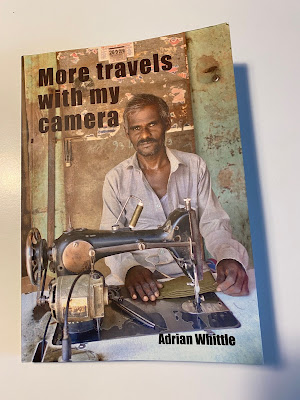
More Travels With My Camera

American photographer Alfred Eisenstaedt famously said, “it is more important to click with people than to click with the shutter”. I agree with him. For me, a photograph is often the culmination of a longer exchange with a stranger who initially interests me because of their face, clothing or activity. This exchange may be short or can develop into a more sustained connection. There are people in Kolkata, Mumbai, and Delhi that I clicked with on my first visit who I now seek out each time I return. 

This could be because I am a lover of stories. Some of my best pictures have been taken after or while hearing about the lives of others. People will often reveal intimate things about themselves if someone shows interest, even a complete stranger. In return the photographer may be asked to share their story and when traveling I am often questioned about my family, work, and financial and marital status. 


My curiosity has led to unexpected experiences. I’ve been asked to sing in Hindi in a barber shop in Lucknow and also by a group of sweepers in a Mumbai street. I’ve been quizzed on Premier League football and the British Royal Family by tipsy agricultural workers in a remote part of Myanmar. In a Kolkata street quite a crowd gathered when a vendor refused to believe that I don’t have a car. His parting shot was: “if you don’t have a car then you are not from London”. 


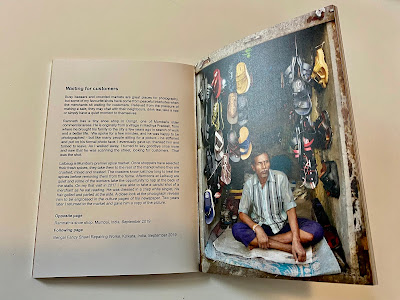
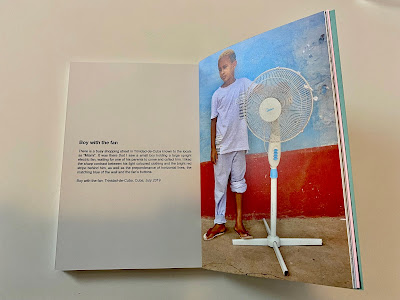
Next week, my new exhibition, More Travels With My Camera, opens at the Jeannie Avent Gallery in East Dulwich, London.  It includes photographs taken in Cuba, India, Myanmar and Peru between 2017 and early 2020. In early 2020 international travel became almost impossible and is only now, beginning to recover. Myanmar has seen violent and ongoing political upheaval and in Cuba there have been the first anti-government demonstrations for thirty years. It may still be some time before it is possible to revisit some of the people pictured in More Travels With My Camera. Until then I hope my photographs will bring their stories to a wider audience.


More Travels With My Camera opens at the Jeannie Avent Gallery, East Dulwich, London SE22 9EU on October 21st and runs until November 2nd. The gallery will be open every day from 10-5 and 10-6 on Fridays. 


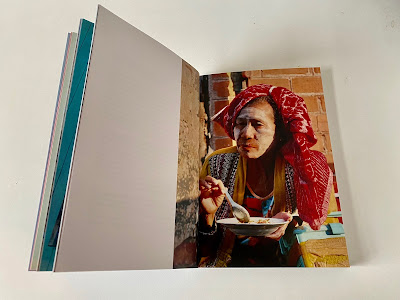
The images featured in this post are from a book produced to accompany the exhibition, also entitled "More Travels With My Camera". It contains 36 full colour pictures and the stories behind some of them. Copies will be available for purchase at the gallery during the period of the exhibition or by emailing adrianpwhittle@outlook.com 


Wednesday, 13 May 2020

The Ahuja Family And Early Burmese Photography.

From 1824 to 1937, Burma (today's Myanmar) was ruled as part of British India. It was then governed as a separate entity until independence in 1948. During the colonial period, many Indians came to live, work and establish businesses in the country. It is estimated that there are over 900,000 people of Indian ethnicity living in Myanmar today, many of them the descendants of those who came in the 19th and early 20th centuries. The Ahuja family arrived in Rangoon (now Yangon) in 1885 when D.A. Ahuja acquired the Kundandass and Co. photographic studio. There is a division of opinion about where the family came from. In his excellent book, Burmese Photographers, Lukas Birk suggests they came from Shikapur, Sindh in what is now Pakistan but at least one other source refers to them as Punjabis. 


1901 was an important year for the business. In addition to changing its name to the D.A. Ahuja Studio, our man published a guide to "Photography in Burmese for Amateur Photographers" and his nephew Tickamdas Naraindas Ahuja (T.N.) joined him from India. The studio thrived, attracting customers from the British community as well as from local families who came to be photographed or to buy cameras and photographic paper imported from India. The success of the business is demonstrated through the studio being located on the first floor of a building at 47 Sule Pagoda Road, in the heart of downtown Yangon. There is anecdotal evidence of the business surviving there until the 1960's.

Around 1906, D.A. acquired a number of pictures taken by German photographer Philip Adolphe Klier. The collection included architectural and highly stylised ethnographic pictures taken in different parts of Burma. Ahuja began publishing the pictures as postcards but there seems to have been some problem about how he acquired these works and in 1907, Klier took successful legal action against him. Losing the legal battle was only a temporary setback as in 1909 Ahuja purchased the archive of Italian photographer Felice Beato and also became the legal owner of Watts and Skeen, a studio established by Frederick Skeen in 1887. The Skeen family also had a photographic business in Ceylon (now Sri Lanka). Beato's archive included landscape works, stylised portraits and also war photography from Japan, China and the Middle East. Klier died in 1911 and from 1914, Ahuja resumed producing some of his pictures as postcards. He was to publish 600 cards over the next 20 years, some of which can be found at card sales or occasionally on eBay. The cards were sent to Germany to be chromo-lithographed, ensuring the best quality finishes.


The postcards cover a wide range of subjects. There are several studio shots of elegant women, slightly stiff looking family groups, important monuments, snake charmers and dancers. There is also at least one card showing prisoners in Rangoon jail queueing to collect their food which whilst fascinating is an unusual image to send to the family back home.

D.A.'s nephew, T.N. opened his own studio in 1916 with a shop at 86 Phayre Street (now Pansodan Road) where he operated as an agent for Kodak products. There is some evidence that he also served as magistrate. Business was interrupted in 1942 when the family fled before the arrival of the Japanese but they quickly returned to reopen the studio at the end of the war. In 1948 T.N.'s son, R.A. Ahuja opened another studio at 386 Dalhousie Road (now Maha Bandoola Road). The store became the sole agent in Burma for the sale of Gevaert products and operated until 2007. R.A. the last remaining member of the Ahuja family in Burma died in 2014, bringing almost 130 years of their presence in the country to an end. The date of D.A.'s death is unknown.

The images included in this post are from reprints of the cards I purchased from the Yangon Heritage Trust at 22-24 Pansodan Road in 2017. The Trust is a great source of information on Yangon's built heritage. As well as selling books, maps and postcards, it stages occasional exhibitions and guided walks.  I have a habit of buying postcards on my travels and then putting them "somewhere safe" when I get home. During the lockdown I have been sorting through my collection and rediscovered my Ahuja cards. I also turned back to the already mentioned  excellent book by Lukas Birk which has a short section on the Ahujas.  Birk is an accomplished traveller and photographer whose projects have included research into the now almost disappeared box cameras of Kabul. 


D.N. Ahuja also produced postcards featuring images from India, some of which may have been his won work. You can see some of them on the Paper Jewels website.

It is not possible to confirm which of the images featured in this post are the work of the Ahuja family or are from other photographer's archives.


You can see more pictures from Myanmar here.

Sunday, 2 February 2020

Faces of Yangon

Yangon is one of those cities that tourists visit for a couple of days, go to the main attractions and then leave thinking they've seen everything. They are wrong. True, it may lack the sophistication of some major Asian cities, has little in the way of nightlife and its public transport system can be challenging. But none of this matters when there is something, or someone, interesting around every corner. The eclectic mix of architecture that includes Indian and Chinese influences, crumbling survivors of the colonial period and classic Burmese style pagodas is reflected in the diversity of the people, many of them happy to share their story with interested passers-by.

Buddhist monk on Yangon's Circle Line train
The best place to see this rich mix is of course in the streets, particualrly the numbered lanes that cross the main boulevards of the city centre. From 17th Street to the high 20's it is a good idea to look up and admire the many remaining shop-houses, some of them 100 years old. Built to accommodate a commercial purpose on the ground floor with a residential unit above they are beginning to fall victim to developers so go and see them now. Some have retained their wooden facades and in 19th street in particular there are a number of Clan Association buildings with Chinese signage and the occasional, live, fighting cock tethered outside. There are also numerous markets. 17th Street hosts a famous daily street market as does the upper end of 38th Street, both of them selling all kinds of fresh fruit, vegetables, meat and fish as well as flowers, spices and other goods. The famous Bogalay Zay and Bogyoke markets are also worth a visit although the latter a little too touristy for me nowadays. Outside of the organised markets there are countless, often "informal" vendors selling snacks. fruit, household goods or offering various street side repair services.

Happy vendor, 17th Street
Waiting for customers, rickshaw driver, 14th Street
Interesting as the architecture and sale goods are, it is of course the people of Yangon that bring these streets to life and who hold a special attraction for me. They also make this one of the most photogenic locations I've ever visited and in general people are happy to pose for photographs. It is also relatively easy to take candid shots of the city's street life. One of the iconic sights of Yangon and Myanmar generally is the daily procession of Buddhist monks and nuns collecting donations of rice, other foods and sometimes money from the faithful who hope to gain merit from this good deed. I often find this to be can a moving sight as some of the nuns in particular are very young, many of orphans or from families too poor to look after them.

Breakfast in the San Pya fish market
Shy porter, Thiri Mingalar wholesale market
As well as walking the streets of Yangon, I enjoy visiting the huge wholesale markets located just a short distance from the city centre. The San Pya wholesale fish market and the vast Thiri Mingalar fruit, vegetable and flower market receive few foreign visitors.  So few that I don't recall seeing a single tourist during any of the visits I've made. The workers may be a little surprised to see a foreigner but are nonetheless very welcoming. In most cases they are too busy to spend much time talking but the workers are generally relaxed about being photographed. This makes up for the overpowering smell at San Pya which permeates everything and which will require you to send all of your clothes to the laundry after a visit!  Waterproof boots are also strongly advised if visiting.

This cheeky pair followed me around Thiri Mingalar until I took their picture
Worker with neck tattoos,  San Pya fish market
During my most recent time in Yangon, I had the privilege of visiting the neighbourhood of a good friend who I first met as a guide four years ago. Yuzana Garden City is about a thirty minute drive from the city centre. Primarily a residential area, it also has a large, busy market selling the usual food items and household goods. Until recently the market location was not busy as the vendors preferred to set up shop at the roadside. This may have been good for business but it prevented traffic from passing or in some cases even entering the streets. The local authority stepped in and there is now enforcement in place to prevent this behaviour - although it doesn't stop some vendors sneaking back to the street side in the afternoons!

As we walked through the market, people called out "hello"and "where are you from" - something that I have experienced in my travels in many countries, but here they also like to tease. The female vendors in particular have a good sense of humour, suggesting I might like to marry their friend or take them back to London with me. Several of them claimed me as their relative when neighbouring vendors expressed surprise at seeing me. My kind of humour. Here, not only were people happy to be photographed but some also requested me to take their pictures or those of their friends. I often find that when someone volunteers their friends for a picture, what they really mean is they want one of themselves but are too shy to ask. My hour or so in the market here passed very quickly and I am extremely grateful for the experience.


Herbs vendor, Yuzana Garden City
Snacks vendor, Yuzana Garden City
Rickshaw driver waiting for customers, Yuzana Garden City
I've written several times about the etiquette of photographing people in the street but it's worth mentioning a few things again. If I want to take a close-up or a more "formal" portrait, I always seek permission first. I wouldn't want someone to come up to me shove a camera in my face and then walk off. If I can I make efforts to talk to the person a little before requesting a picture. It's helpful to walk with someone local as they can interpret and also advise on any important issues that might not occur to an outsider. If I want to photograph children I always ask the parent or an adult accompanying them and I never photograph children who are alone. In markets I often buy something from a vendor first. This works better in some cases than in others. Buying a few pieces of fruit is not a problem and they can always be given to someone who needs them more than me. Fish, meat or live animals is a bit more of a problem! Obviously for candid shots things are a little different but it is still important to be sensitive and if someone says "no" or indicates they are unhappy with being photographed then accept this graciously and point your camera elsewhere. It is always good to show people their pictures on the camera screen and if possible to print copies and take them back to the although this can be difficult due to one's schedule or because it can be hard to find the people again.

The portraits featured in this post were taken over five days in January this year. I printed copies and was able to distribute some of them. I plan to continue this project and to capture the stories of some of Yangon's people during my next visit.


You can see more pictures from Myanmar here.

And to close, some more citizens of Yangon...

Rakhine woman, fruit vendor outside Indian Bazaar
Buddhist nun, 18th Street
Vendor, 17th Street
Alone and watching the world go by, 17th Street
Just me and my phone, porter in 17th Street
Ponderous look, 38th Street
Preoccuiped smoker, Merchant Road
Mister Ayoob, merchant in 41st Street
Time for a rest, 17th Street
Confidence, Innsein township, Yangon suburb